







What's Happening?
The University of California, Agriculture and Natural Resources (UC ANR), in collaboration with the University of California, Santa Cruz, is seeking applications for a UC Cooperative Extension (UCCE) Specialist. This position will focus on the intersection
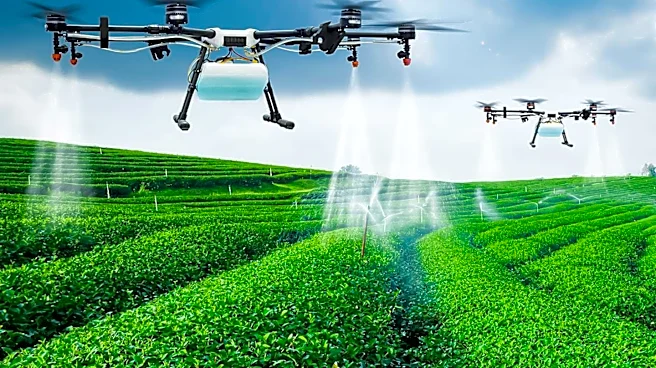
of food safety and organic/regenerative farming practices, utilizing advanced agricultural technologies. The specialist will be based at UC Santa Cruz and the Monterey Bay Education, Science, and Technology Center (MBEST). The role involves developing and conducting research and educational programs to address evolving food safety challenges in specialty crop production. Key areas of focus include the application of sensors, biosensors, spectral imaging, drones, robotics, physical AI, embedded systems, wireless sensing, and machine learning to ensure harvest safety while promoting sustainable farming methods. The specialist will bridge electrical and computer engineering with agricultural applications, translating new engineering capabilities into practical food safety tools for California growers. This initiative aims to support the state's agriculture sector in adopting more organic, regenerative, and high-tech practices.
Why It's Important?
This specialist position is crucial for California's agriculture sector, particularly the fresh produce industry, where food safety is a major priority. The role addresses the growing demand for organic and regenerative farming practices, which sometimes conflict with traditional food safety risk-reduction methods. By integrating cutting-edge technologies like AI and drones, the specialist will help growers maintain high food safety standards while adhering to sustainable practices. This initiative can lead to the development of innovative solutions for detecting contaminants, assessing risks, and improving overall agricultural efficiency. It also aims to provide science-based assessments in a landscape often driven by proprietary third-party metrics, offering clearer, more reliable guidance for farmers. The work will benefit diverse communities throughout California by promoting safer food production and more environmentally friendly agricultural techniques.
What's Next?
The selected UCCE Specialist will be responsible for designing and conducting applied research, building an effective extension education program, and publishing findings in accessible formats. This will involve extensive collaboration with UC Santa Cruz faculty, UC ANR's network of advisors, specialists, and other academic and industry partners. The specialist will also engage with county agricultural commissioners, pest control associations, government scientists, and regulatory personnel to disseminate knowledge and facilitate the adoption of new technologies. Future developments may include legislative recommendations for drone safety in agriculture, novel approaches to drone applications, and the integration of environmental sensors with robotic systems for real-time data adaptation. The position aims to inform and train the next generation of agricultural workers with high-tech skills, ensuring long-term advancements in food safety and sustainable agriculture.
Beyond the Headlines
This initiative represents a broader shift towards integrating advanced technology with sustainable agricultural practices, highlighting the increasing complexity and interdisciplinary nature of modern farming. The focus on regenerative agriculture, combined with AI and robotics, underscores a commitment to ecological health and long-term food security. Ethically, this role addresses the balance between technological advancement and environmental stewardship, ensuring that innovation serves both economic and ecological goals. Legally, the research may influence future regulations regarding drone use, data privacy in agricultural monitoring, and food safety standards in organic production. Culturally, it signifies a move towards a more science-driven and technologically integrated approach to farming, potentially changing traditional agricultural practices and fostering a new generation of tech-savvy farmers. This position could set a precedent for how other agricultural regions approach the challenges of food safety and sustainability.