





What's Happening?
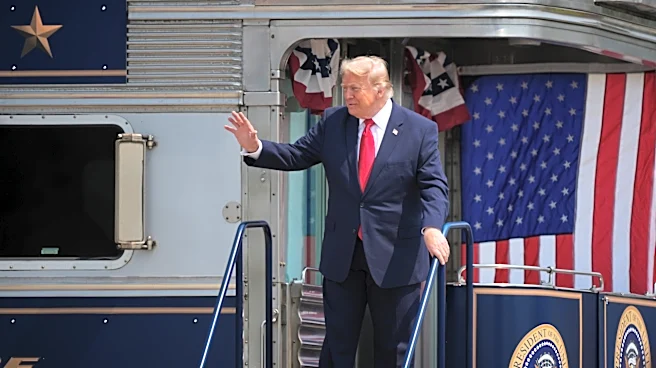
President Trump has recently intensified his rhetoric against the Democratic Party, labeling them as 'hardcore, godless Communists' and warning that their victory in the upcoming midterm elections could pose a significant threat to the United States.
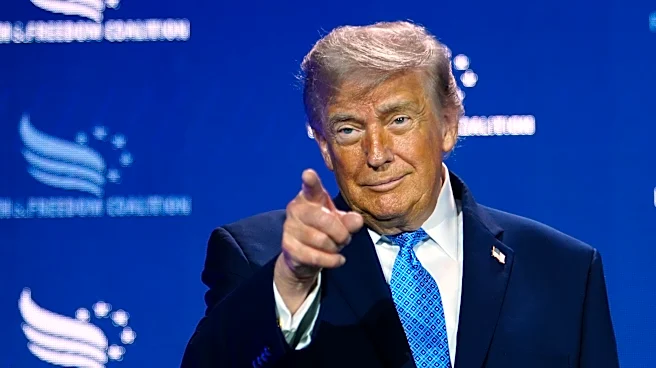
This narrative was reiterated during his visit to the Theodore Roosevelt Presidential Library in North Dakota and at the Faith & Freedom Coalition’s 2026 policy conference. However, experts have challenged these assertions, stating that no Democratic candidates openly identify with the U.S. Communist Party. They argue that while some Democratic figures may align with democratic socialism, this ideology is distinct from communism, focusing instead on expanding social safety nets within a democratic framework. The Democratic Socialists of America, a political organization, is often associated with these candidates, but it is not a political party.
Why It's Important?
The claims made by President Trump highlight a strategic effort to paint the Democratic Party as extreme, potentially influencing voter perceptions ahead of the midterm elections. This rhetoric could polarize the political landscape further, impacting voter turnout and party alignment. The use of communism as a political label taps into historical fears and could sway undecided voters by framing the election as a choice between capitalism and socialism. However, experts emphasize that such claims are misleading and do not reflect the actual political affiliations or ideologies of Democratic candidates. This discourse may also affect the Democratic Party's internal dynamics, as candidates navigate the balance between progressive policies and mainstream appeal.
What's Next?
As the midterm elections approach, it is likely that President Trump and other Republican leaders will continue to use this narrative to galvanize their base. Democratic candidates may need to address these accusations directly, clarifying their positions on socialism and communism to counteract potential misinformation. The outcome of the elections could hinge on how effectively each party communicates its platform and addresses voter concerns about economic and social policies. Additionally, the Democratic Party may face internal debates on how to position itself in response to these attacks, potentially influencing its strategy and candidate selection in future elections.
Beyond the Headlines
The use of communism as a political attack has deep roots in American history, reminiscent of the McCarthy era's anti-communist sentiment. This tactic reflects broader cultural and ideological battles within the U.S., where terms like 'socialism' and 'communism' are often used pejoratively. The persistence of this rhetoric underscores ongoing tensions between progressive and conservative values, highlighting the challenges of political discourse in a polarized society. The implications extend beyond electoral politics, influencing public perceptions of economic and social policies and shaping the national conversation on governance and democracy.