



What's Happening?
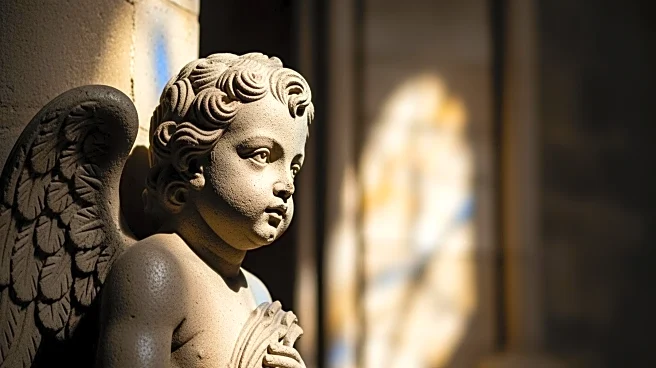
A cherub in a Roman church resembling Italian Premier Giorgia Meloni has caused a stir, prompting investigations by the diocese of Rome and the Italian Culture Ministry. The cherub, part of the Basilica of San Lorenzo in Lucina's renovations, has drawn
attention due to its likeness to Meloni, leading to a surge of visitors. The controversy centers on the cherub's depiction in a position of deference to a bust of Italy's last king, Umberto II, which has historical implications given Italy's rejection of the monarchy post-World War II. The restorer denies using Meloni as a model, claiming the resemblance is coincidental.
Why It's Important?
The incident highlights the intersection of art, politics, and history in Italy. The resemblance of the cherub to Meloni, a figure associated with a right-wing party with neo-fascist roots, raises questions about the portrayal of political figures in religious art. The investigations reflect broader societal tensions regarding Italy's historical narratives and the role of contemporary politics in cultural heritage. This controversy underscores the sensitivity surrounding Italy's past and the ongoing dialogue about its representation in public spaces.
What's Next?
The Culture Ministry's investigation aims to determine the nature of the cherub's depiction and decide on any necessary actions. The outcome could influence future restoration projects and the portrayal of political figures in religious art. The church's response and public interest may lead to further discussions about the role of art in reflecting or challenging political narratives. The situation may also prompt broader debates about cultural heritage management and the responsibilities of artists and restorers.