






What's Happening?
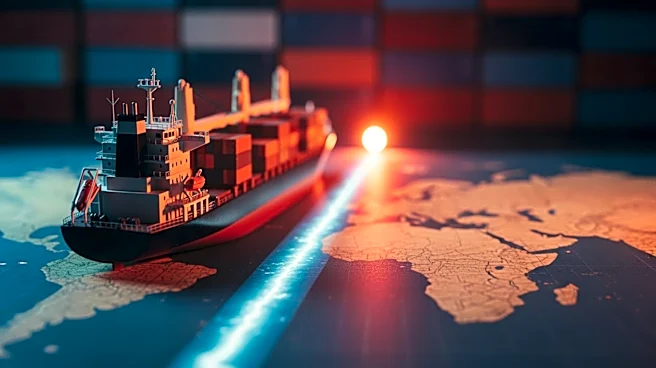
The world's largest container shipping company, MSC, is implementing a new service to circumvent the blocked Strait of Hormuz by utilizing trucks and smaller vessels. This strategic move involves linking European ports with isolated ports in the Middle
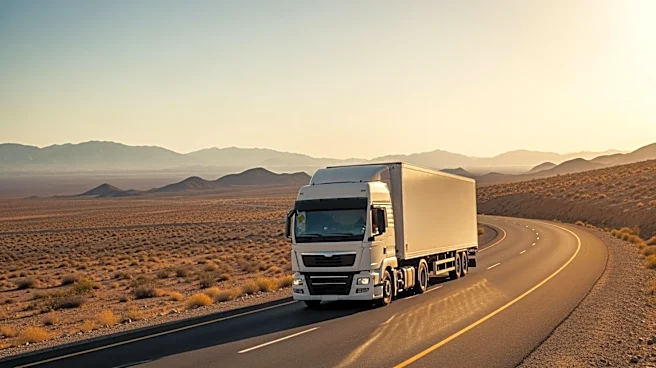
East. The service will commence with a sailing from Antwerp on May 10, making stops in Germany, Italy, Lithuania, and Spain. The ships will navigate through the Suez Canal into the Red Sea, docking at Jeddah and King Abdullah Port on Saudi Arabia's western coast. From there, goods will be transported by trucks across Saudi Arabia to the eastern coast, where smaller ships will carry them to Gulf ports. This initiative is a response to the current blockade of the Strait of Hormuz, a critical maritime passage for global oil and gas shipments.
Why It's Important?
The blockade of the Strait of Hormuz poses significant challenges to global trade, particularly for oil and gas shipments. MSC's decision to reroute cargo through alternative land and sea routes highlights the adaptability of global shipping logistics in response to geopolitical tensions. This move could mitigate potential disruptions in the supply chain, ensuring the continued flow of goods between Europe and the Middle East. It also underscores the strategic importance of Saudi Arabia as a transit hub, potentially boosting its role in regional trade. The rerouting could have economic implications, affecting shipping costs and delivery times, and may influence future trade route planning.
What's Next?
As MSC launches this new service, other shipping companies may follow suit, seeking alternative routes to bypass the Strait of Hormuz. This could lead to increased investment in infrastructure within Saudi Arabia to support the new logistics routes. Additionally, geopolitical developments in the region will be closely monitored, as any resolution or escalation of the blockade could impact the viability and necessity of these alternative routes. Stakeholders, including governments and businesses, will likely assess the long-term implications of these changes on trade and economic stability.