



What's Happening?
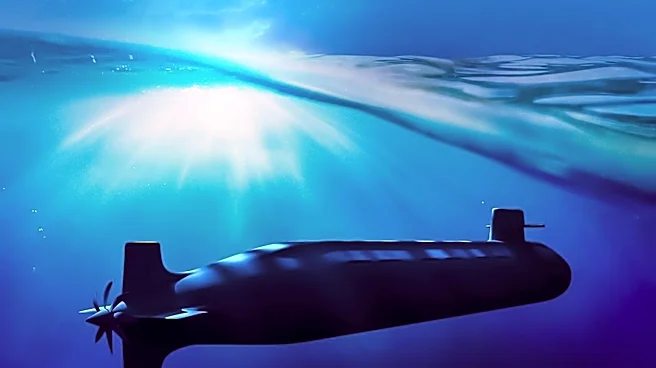
China is reportedly constructing a 200-meter mothership designed to support giant uncrewed submarines, a development that could mark a global first in naval technology. Satellite imagery has revealed the vessel under construction at China’s Hudong-Zhonghua
shipyard in Shanghai. Analysts, including open-source naval analyst H.I. Sutton, suggest the ship features a large internal hangar and a stern launch-and-recovery system specifically for extra-extra-large uncrewed underwater vehicles (XXLUUVs). This mothership is expected to carry, maintain, launch, and recover several of China's largest underwater drones, which are significantly larger than comparable Western systems. China has already tested 35-meter and 45-meter uncrewed submarines in Hainan, which previously relied on floating docks for transport. This new vessel would enable sustained remote operations for these advanced autonomous submarines, extending China's undersea capabilities far beyond its coastal waters.
Why It's Important?
This development is important as it signifies a significant leap in China's naval capabilities and could reshape global undersea warfare. The ability to deploy and support giant uncrewed submarines from a dedicated mothership provides China with a unique strategic advantage, allowing for extended autonomous operations in distant waters. This advancement intensifies the global naval competition, particularly with Western nations like the United States and Britain, which are also developing their own autonomous underwater systems, albeit on a smaller scale. While the U.S. is developing Boeing’s Orca XLUUV (15.5 meters) and Britain has Project Cetus's XV Excalibur (12 meters), neither is publicly known to involve a dedicated 200-meter mothership. This technological lead could enable China to project power and gather intelligence more effectively in contested maritime regions, potentially altering the balance of naval power and influencing future defense strategies globally.
What's Next?
The completion and deployment of China's uncrewed submarine mothership will likely prompt other major naval powers, including the U.S. and European nations, to reassess their own autonomous underwater vehicle programs and potentially accelerate their development of similar support vessels. This could lead to an increased focus on anti-submarine warfare capabilities and countermeasures against such advanced autonomous systems. The strategic implications will extend to international maritime security, with potential shifts in surveillance, reconnaissance, and naval presence in key waterways. Furthermore, the operationalization of this mothership could lead to more frequent and extended Chinese naval activities in international waters, potentially increasing geopolitical tensions and necessitating new diplomatic and defense dialogues among global powers regarding the responsible use of autonomous naval technologies.
Beyond the Headlines
The development of a dedicated mothership for giant uncrewed submarines raises profound ethical and legal questions regarding autonomous warfare. The increased reliance on AI-driven systems in naval operations could blur the lines of accountability in conflict situations and introduce new challenges for international maritime law. The sheer scale and autonomy of these systems could also lead to an arms race in underwater drone technology, with nations striving to develop more sophisticated and harder-to-detect vehicles. This technological shift could also have long-term implications for naval doctrine, potentially reducing the need for human-crewed submarines in certain roles and altering the nature of naval personnel training and deployment. The ability to conduct sustained, remote undersea operations without human risk could also lower the threshold for engagement in certain scenarios, necessitating a global conversation on the governance and control of such advanced military technologies.