
What's Happening?
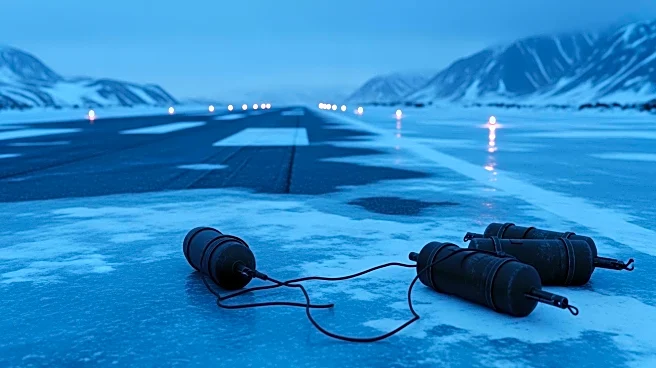
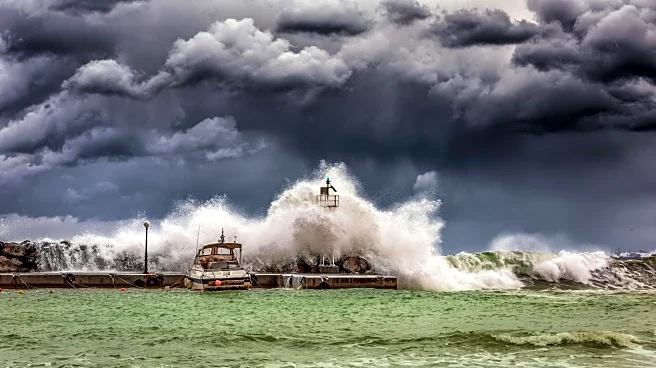
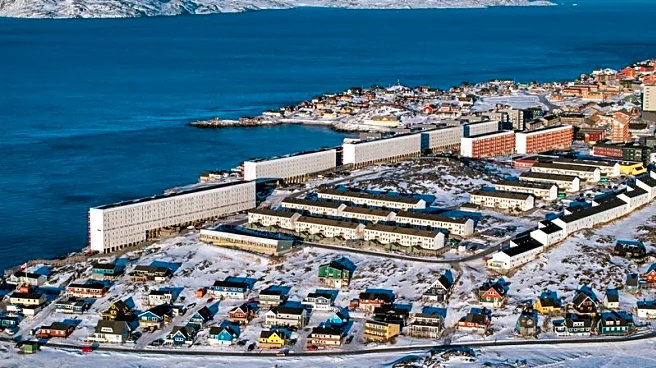
A massive landslide in Dickson Fjord, Greenland, triggered a 650-foot mega-tsunami that sent seismic waves detectable around the globe for nine days. On September 16, 2023, over 25 million cubic yards of rock and ice fell into the fjord, creating a wave that devastated
equipment on nearby Ella Island. The event was so powerful that it caused a seiche, a standing wave in the fjord, which continued to oscillate and send vibrations through the Earth's crust. This phenomenon was recorded by seismic stations worldwide, marking an unprecedented event in terms of its global seismic signature. The study of this event involved over seventy researchers from forty-one institutions, highlighting the interdisciplinary effort required to understand such natural disasters.
Why It's Important?
The mega-tsunami in Greenland underscores the increasing risks posed by climate change, as warming temperatures destabilize glaciers and increase the likelihood of such catastrophic events. The incident highlights the need for improved monitoring and early-warning systems, especially as Arctic regions become more accessible to tourism and shipping. The ability to predict and respond to such events could save lives and prevent economic losses. Furthermore, the event provides valuable data for refining models of fjord dynamics and landslide-induced tsunamis, which could enhance future disaster preparedness and response strategies.
What's Next?
Researchers are now examining seismic archives to identify similar events that may have gone undetected in the past. This could improve understanding of natural disaster patterns and inform future risk assessments. Additionally, authorities are considering integrating satellite data with real-time seismic monitoring to develop more effective early-warning systems. As climate change continues to alter the stability of natural landscapes, such systems will be crucial in mitigating the impact of similar events in the future.
Beyond the Headlines
The Greenland mega-tsunami serves as a stark reminder of the interconnectedness of climate change and natural disasters. As glaciers retreat and landscapes become more unstable, the frequency and intensity of such events may increase. This raises ethical and policy questions about human activity in vulnerable regions and the responsibility to protect both local communities and the environment. The event also highlights the potential of advanced satellite technology to enhance scientific understanding and disaster response capabilities.