



What's Happening?
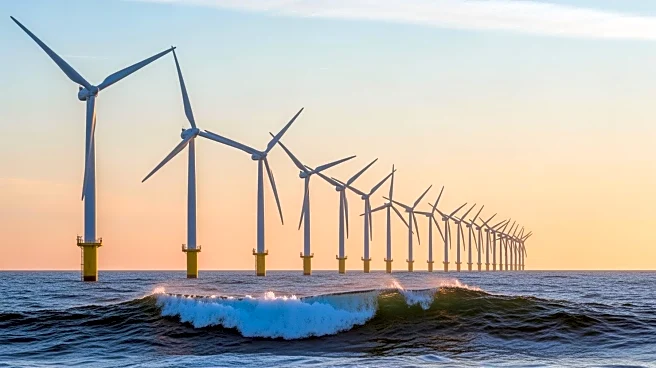
Nine European countries, including Germany, France, the UK, and Denmark, have signed an agreement to develop offshore wind power in the North Sea. This initiative aims to create the world's largest clean energy reservoir, reducing reliance on Russian
energy imports. The agreement, part of the 'Hamburg Declaration,' sets a target of 300 gigawatts of clean energy capacity by mid-century, with an intermediate goal of 120 gigawatts by 2030. The move is a response to Russia's invasion of Ukraine and the subsequent energy crisis, as Europe seeks to enhance its energy security and independence. The EU's Commissioner for Energy and Housing, Dan Jorgensen, emphasized the importance of this agreement in signaling to Russia that the EU will no longer be subject to energy blackmail.
Why It's Important?
This development is significant as it represents a strategic shift in Europe's energy policy, aiming to reduce dependency on Russian energy and enhance energy security. By investing in renewable energy, Europe is not only addressing immediate energy needs but also contributing to long-term climate goals. The initiative could lead to increased economic activity in the renewable energy sector, creating jobs and fostering innovation. However, it also highlights the geopolitical tensions between Europe and Russia, as energy independence is closely tied to political autonomy. The success of this project could set a precedent for other regions seeking to reduce reliance on fossil fuels and transition to sustainable energy sources.
What's Next?
The next steps involve the implementation of the 'Hamburg Declaration,' with countries working collaboratively to meet the set targets. This will likely involve significant investment in infrastructure and technology to support offshore wind projects. Additionally, there may be further diplomatic efforts to strengthen alliances and partnerships within Europe and with other global energy players. Monitoring the progress towards the 2030 and mid-century targets will be crucial, as will addressing any technical or political challenges that arise. The EU will also need to balance its energy strategy with other geopolitical considerations, particularly in its relations with the United States and other energy suppliers.