






What's Happening?
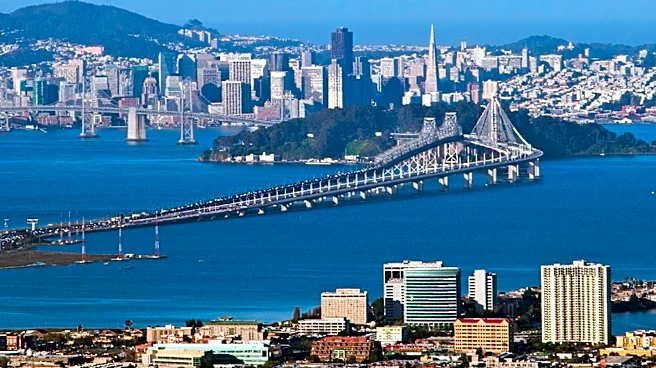
Piedmont, a city less than two square miles in size, continues to exist as an independent municipality entirely surrounded by Oakland in the East Bay. This unique geographical arrangement has made Piedmont one of the wealthiest cities in the Bay Area.
The historical context of Piedmont's separation from Oakland is being revisited, particularly as some Oakland residents advocate to 'Cancel Piedmont' as a means to address regional inequality. This discussion stems from a 2019 episode of the 'Bay Curious' podcast, which explored the city's history and its relationship with Oakland.
Why It's Important?
The continued existence of Piedmont as a separate, affluent city within Oakland highlights significant issues of socio-economic disparity and historical urban planning in the U.S. The 'Cancel Piedmont' movement, driven by Oakland residents, underscores growing frustrations over wealth inequality and resource distribution within metropolitan areas. This situation can lead to disparities in public services, educational opportunities, and infrastructure between neighboring communities. The historical decisions that led to Piedmont's independence have created a lasting impact on the demographic and economic landscape of the region, influencing property values, tax bases, and the overall quality of life for residents in both cities. This dynamic serves as a microcosm of broader national conversations about segregation, gentrification, and equitable development in urban environments.
What's Next?
The ongoing debate surrounding Piedmont's status suggests that discussions about regional inequality and municipal boundaries will likely continue in the Bay Area. While the 'Cancel Piedmont' movement is a symbolic call to action, it could lead to increased advocacy for policy changes aimed at addressing wealth disparities and resource allocation. This might include proposals for regional tax-sharing agreements, joint initiatives for public services, or even more radical discussions about municipal consolidation. The attention drawn to Piedmont's unique situation could also inspire similar movements in other U.S. metropolitan areas where affluent enclaves exist within larger, more diverse cities, prompting a re-evaluation of historical municipal divisions and their contemporary impacts on social equity.
Beyond the Headlines
The case of Piedmont and Oakland delves into the complex interplay of historical land use, socio-economic stratification, and local governance. The initial reasons for Piedmont's separation, often rooted in desires for distinct community character and control over local resources, have inadvertently contributed to a stark contrast in wealth and opportunity between it and its surrounding city. This situation raises profound questions about the ethical implications of municipal independence when it exacerbates regional inequality. It also highlights the challenges of addressing systemic disparities through local political action, as the legal and administrative hurdles to altering municipal boundaries are substantial. The 'Cancel Piedmont' sentiment, while perhaps not a literal call for dissolution, reflects a deeper yearning for a more integrated and equitable urban fabric, challenging the notion that affluent communities can exist in isolation from the broader socio-economic realities of their metropolitan regions.