





What's Happening?
U.S. Marines recently conducted a three-day training exercise in Twentynine Palms, California, focusing on countering small Unmanned Aerial Systems (sUAS) using standard-issue small arms and light weapons. The exercise involved operatives from the 1st
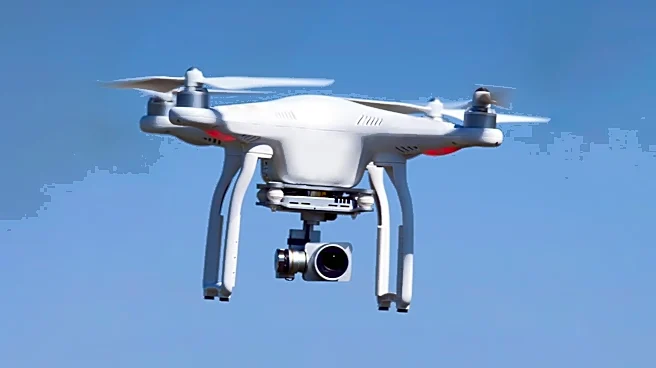
and 2nd Marine Divisions, who trained against consumer drones equipped with explosives or used for reconnaissance, flown by well-trained pilots from the US Marine Corps’ Tactical Training and Exercise Control Group. Weapons utilized included M27 automatic rifles, M1014 combat shotguns, and M32A1 and M320 grenade launchers. The sUAS craft flew at speeds over 90 miles per hour, with attack runs as close as 20 meters, providing a realistic threat scenario. The training aimed to build confidence and decisiveness in Marines when facing drones without electronic countermeasures, a growing concern in modern battlefields.
Why It's Important?
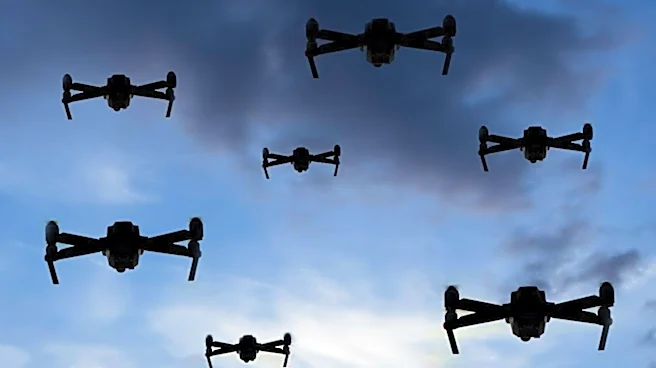
This training signifies a critical adaptation in U.S. military strategy to address the evolving threat posed by readily available and cost-effective consumer drones. The proliferation of sUAS in conflict zones globally has demonstrated their effectiveness for surveillance and direct attacks, making counter-drone capabilities a baseline requirement for troop safety and operational success. By focusing on small arms and light weapons, the U.S. Marines are developing organic, squad-level responses to drone threats, ensuring that personnel can effectively engage these targets even when advanced electronic countermeasures are unavailable. This approach enhances the survivability and operational readiness of ground forces, directly impacting the effectiveness of U.S. military deployments and potentially influencing future procurement and training programs across all branches of the armed forces.
What's Next?
The success of this training exercise is expected to lead to the inclusion of classroom and practical sessions on tactical responses to sUAS and C-sUAS in future Service Level Training Exercises. This indicates a broader integration of counter-drone tactics into standard military training curricula. The U.S. Marine Corps will likely continue to refine these tactics, potentially exploring new weapon systems or ammunition types optimized for drone engagement. Furthermore, the emphasis on realistic threat scenarios suggests ongoing collaboration with specialized units to simulate advanced drone attacks. This continuous adaptation will be crucial as drone technology advances, ensuring that U.S. forces maintain a decisive edge against this persistent and evolving threat.
Beyond the Headlines
The U.S. Marines' training highlights a significant shift in military doctrine, moving beyond traditional air defense systems to empower individual soldiers with the means to counter aerial threats. This decentralization of air defense responsibilities raises questions about the psychological impact on soldiers, who must now be prepared to engage targets in three dimensions. It also underscores the democratization of warfare, where inexpensive, off-the-shelf technology can pose a serious challenge to well-equipped military forces. This development could lead to a reevaluation of infantry training, equipment design, and battlefield tactics across global militaries. The ethical implications of engaging drones, particularly those that may be remotely piloted or autonomous, also warrant consideration as these technologies become more prevalent in conflict.