






What's Happening?
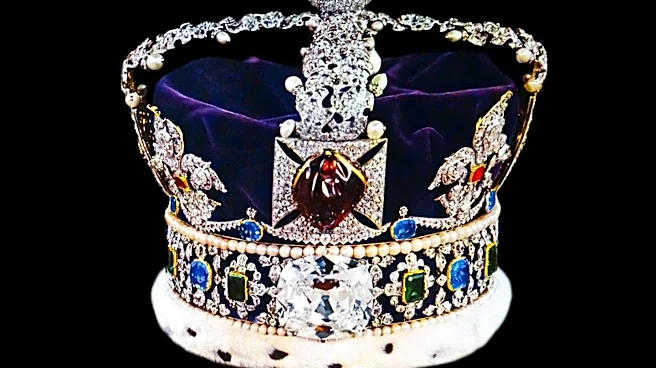
The Koh-i-Noor diamond, a jewel with a long and often violent history, is being re-examined for its origins and the legends surrounding it. Historically, the diamond has been associated with misfortune for its male owners and has been avoided by female
royals in recent decades. Beyond its alleged curse, the Koh-i-Noor is also recognized as a potent symbol of the United Kingdom's colonial rule in India. Its true origins are lost to time, but India was the sole source of diamonds until 1725, suggesting its discovery in one of the country's mines. The diamond's first definitive appearance in written records dates back to 1628, when it was part of a gemstone-covered throne built for the 17th-century Mughal ruler Shah Jahan. Eyewitness accounts from the 1740s describe the diamond, then known as the 'Mountain of Light,' as being set into a peacock on top of the throne, with a value considered immeasurable.
Why It's Important?
The narrative surrounding the Koh-i-Noor diamond is important as it highlights the complex interplay between historical artifacts, colonial legacies, and cultural symbolism. The diamond's association with a 'curse' and its role as a symbol of British colonial reign in India underscore ongoing debates about the repatriation of cultural heritage and the ethical implications of historical acquisitions. For the U.S., while not directly involved in the diamond's history, these discussions resonate with broader conversations about historical injustices and the ownership of cultural property, influencing academic discourse and public sentiment regarding museum collections and international relations. The story also serves as a case study in how historical narratives can be shaped by power dynamics and how objects can embody centuries of political and social conflict, impacting contemporary views on national identity and historical accountability.
What's Next?
The ongoing discussion surrounding the Koh-i-Noor diamond is likely to continue fueling conversations about colonial-era artifacts and their rightful ownership. As awareness of historical injustices grows, there may be increased pressure from various groups and nations for the repatriation of such items. This could lead to further diplomatic discussions between the United Kingdom and India, potentially influencing international policies regarding cultural heritage. The diamond's story may also inspire more research into the provenance of other historical artifacts, prompting museums and institutions globally to re-evaluate their collections and engage in more transparent dialogues about their origins. Public interest in the diamond's 'curse' and its symbolic weight is expected to persist, contributing to its enduring cultural significance.
Beyond the Headlines
The Koh-i-Noor diamond's story extends beyond its material value, delving into profound ethical and cultural dimensions. Its history as a symbol of colonial power raises questions about the lasting impact of imperialism on national identity and cultural memory. The 'curse' associated with the diamond, while perhaps superstitious, reflects a deeper narrative of conflict and suffering tied to its acquisition and ownership. This narrative prompts reflection on how historical objects can carry the weight of past violence and exploitation, influencing contemporary perceptions of justice and reconciliation. The diamond's journey through various empires and its current placement in the British Crown Jewels highlight the complexities of cultural appropriation and the ongoing struggle for historical redress, shaping global conversations about heritage, ownership, and the legacies of colonialism.