
What's Happening?
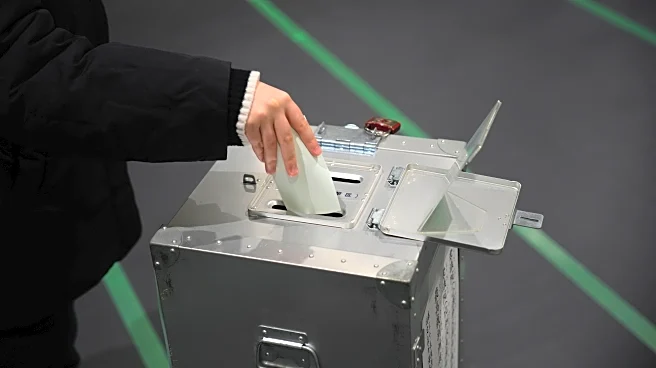
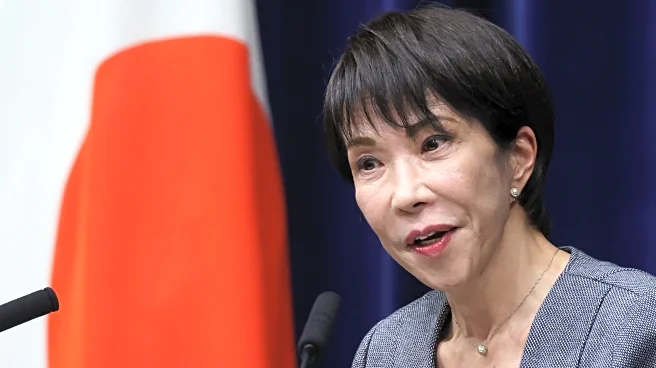
Japan's Prime Minister Sanae Takaichi is considering dissolving the country's Lower House and calling for a snap election in February, as reported by NHK. This decision is influenced by Takaichi's high
approval ratings, which have remained above 70% for three consecutive months. The ruling Liberal Democratic Party (LDP) aims to capitalize on this popularity to stabilize its coalition with the Japan Innovation Party (JIP). The potential election comes amid diplomatic tensions with China, following Takaichi's comments on possible Japanese intervention in Taiwan. The LDP and JIP currently hold a slim majority in the Lower House but are in the minority in the Upper House.
Why It's Important?
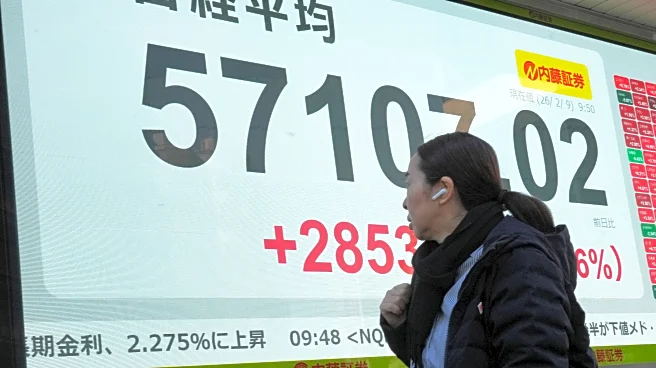
The decision to call a snap election is significant as it could reshape Japan's political landscape. A successful election for the LDP could strengthen its mandate and provide more stability in dealing with international issues, particularly the ongoing tensions with China. The election also serves as a test for Takaichi's leadership and the coalition's ability to maintain its majority. Domestically, the election could impact Japan's economic policies, especially as the country faces challenges like inflation and a contracting economy. Internationally, the election results could influence Japan's diplomatic strategies, particularly in its relations with China and South Korea.
What's Next?
If the snap election is called, the LDP and JIP will need to prepare their campaign strategies to secure a majority. The election's outcome will determine the coalition's ability to implement its policies and manage diplomatic relations. Observers will be watching for any shifts in Japan's foreign policy, especially regarding its stance on China and Taiwan. The election could also prompt reactions from other countries in the region, potentially affecting regional stability and alliances.