






What's Happening?
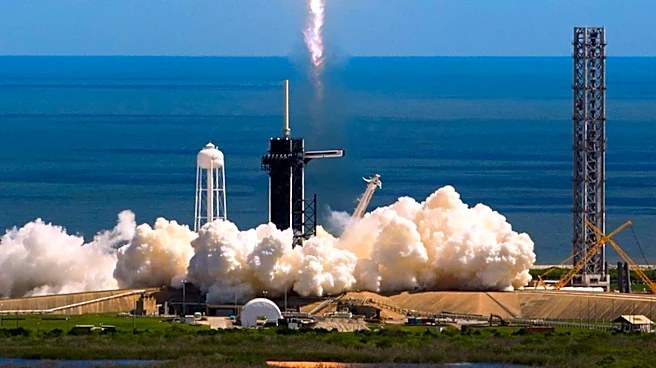
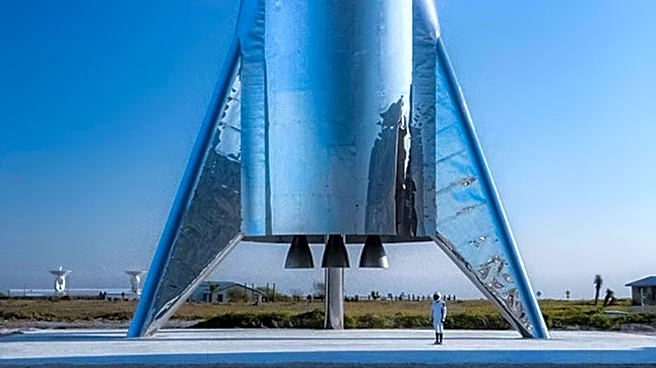
SpaceX has successfully completed the 13th test flight of its Starship upper stage, achieving a soft ocean landing. The launch took place from SpaceX's Starbase site in South Texas, with the upper stage deploying 20 next-gen Starlink satellites before
making a controlled descent into the Indian Ocean. The landing was captured using drones and a 'buoy cam,' showcasing the upper stage's dramatic midair maneuvers to achieve a near-vertical orientation before splashdown. Despite engine issues with the lower stage, the upper stage's performance marks a significant milestone in SpaceX's efforts to develop a rapidly reusable space transportation system.
Why It's Important?
This successful test flight is a crucial step for SpaceX as it continues to develop its Starship system for future space missions, including potential lunar landings under NASA's Artemis program. The ability to achieve a controlled ocean landing demonstrates the progress in making the Starship system reusable, which could significantly reduce the cost of space travel. This development is vital for SpaceX's long-term goals of enabling human exploration of the Moon and Mars, as well as enhancing satellite deployment capabilities. The success of this test flight reinforces SpaceX's position as a leader in the commercial space industry.
What's Next?
SpaceX will continue to refine the Starship system, focusing on achieving full reusability and reliability for future missions. The company aims to participate in NASA's Artemis III mission, which involves docking with the lunar Gateway and potentially landing astronauts on the Moon. Further test flights and developments are expected as SpaceX works towards these ambitious goals. The success of these efforts could pave the way for more frequent and cost-effective space missions, expanding human presence beyond Earth.