








What's Happening?
Democrat Nathan Johnson and Republican Mayes Middleton are set to compete for the position of Texas Attorney General in the upcoming November election. Johnson, a state senator from Dallas, secured nearly 60% of the vote in the Democratic runoff, while
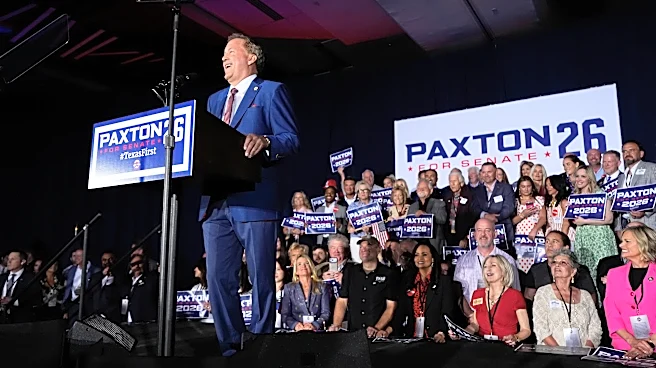
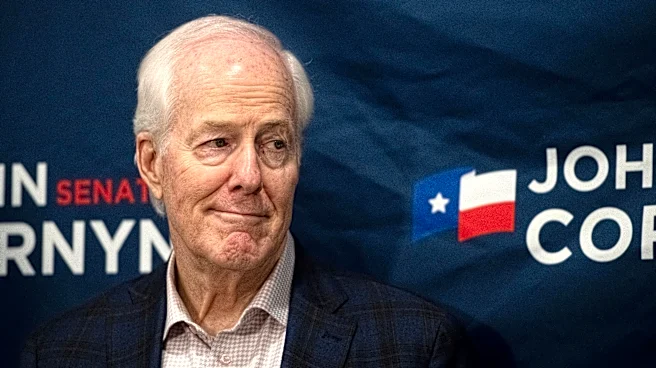
Middleton, representing the 11th district, garnered 56% in the Republican primary. The Associated Press confirmed their victories in their respective contests. The winner will succeed Ken Paxton, who defeated incumbent U.S. Senator John Cornyn in the Republican runoff. Johnson faced former Galveston Mayor Joe Jaworski, and Middleton was opposed by U.S. Representative Chip Roy. The Republican runoff was marked by debates over who was the true MAGA candidate, with Middleton branding himself as 'MAGA Mayes' and criticizing Roy's past comments on President Trump.
Why It's Important?
The Texas Attorney General race is significant as it could influence the state's legal stance on national issues, particularly those aligned with President Trump's agenda. Under Paxton, Texas became a leading advocate for Trump's policies in court. Middleton's campaign emphasized his commitment to continuing this legacy, which could impact legal battles involving federal policies. Johnson's campaign, while less funded, aims to communicate his vision to Texas voters, potentially shifting the state's legal priorities. The outcome could affect Texas' role in national politics, especially in legal challenges against federal actions.
What's Next?
As the November election approaches, both candidates will likely intensify their campaigns to secure voter support. Middleton may continue leveraging his personal wealth to fund his campaign, while Johnson will focus on reaching a threshold to effectively communicate his platform. The race could attract national attention, given Texas' influence in legal matters. Stakeholders, including political leaders and advocacy groups, may engage in the race, supporting candidates aligned with their interests. The election's outcome could reshape Texas' legal strategies and its interaction with federal policies.