









What's Happening?
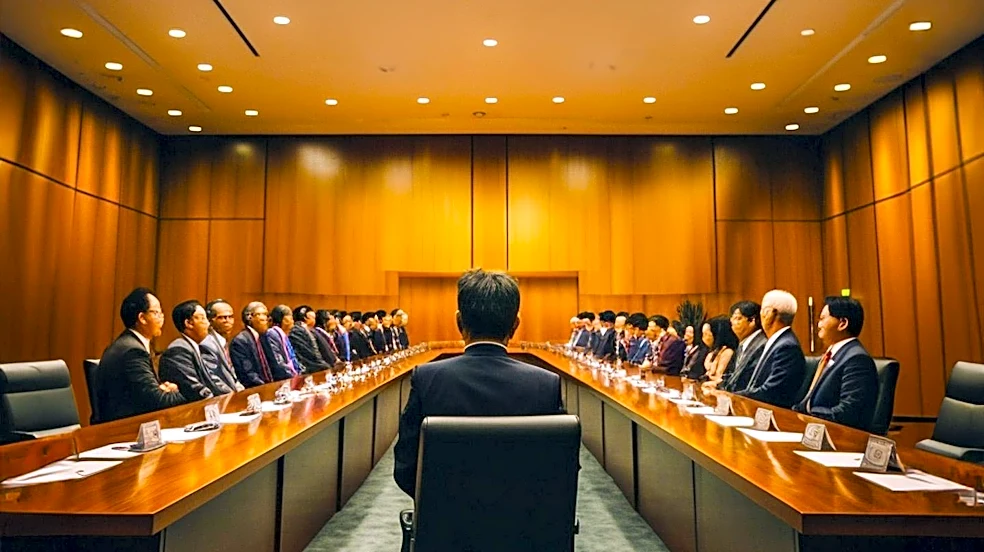
Policymakers, defense practitioners, and experts from the European Union (EU), Japan, and the Indo-Pacific region recently concluded a half-day event in Tokyo. This 'Road to Schuman' event focused on exploring collective responses to emerging security
threats. Organized by the Delegation of the EU to Japan with support from the ESIWA+ project, the gathering served as a preparatory step for the Schuman Security and Defence Forum 2026, scheduled for November 17-18 in Brussels. Discussions at the Tokyo event covered the role of artificial intelligence (AI) in defense innovation and maritime security, as well as its increasing impact on non-kinetic hybrid threats such as cybersecurity and foreign information manipulation and interference (FIMI). EU Ambassador-designate to Japan Giorgio Aliberti emphasized the importance of building security with partners in unstable times, while Mr. Atsushi Ando, Vice-Minister of Defence for International Affairs of Japan, highlighted the interconnectedness of Euro-Atlantic and Indo-Pacific security and Japan's commitment to cooperation with like-minded partners, including the EU.
Why It's Important?
This event underscores the growing recognition among global powers of the interconnected nature of security challenges, particularly in the context of evolving threats like AI-driven warfare and hybrid attacks. For the U.S., which maintains significant strategic interests and alliances in both the Euro-Atlantic and Indo-Pacific regions, these discussions are highly relevant. The collaboration between the EU and Japan on security matters can contribute to a more stable international environment, which indirectly benefits U.S. national security and economic interests. The focus on AI in defense and cybersecurity reflects a shared concern over technological advancements being weaponized, an area where the U.S. is also heavily invested in research and policy development. Furthermore, strengthening partnerships between democratic allies in these regions can help counter the influence of adversarial states and promote a rules-based international order, aligning with stated U.S. foreign policy objectives.
What's Next?
The insights and discussions from the Tokyo 'Road to Schuman' event will directly inform the broader Schuman Security and Defence Forum 2026 in Brussels. This upcoming forum will bring together senior decision-makers from over 85 partner countries and international organizations, EU Member States, EU institutions, and leading think tanks. The goal is to develop more effective responses to current and future security challenges, contributing to global peace and security while upholding the international rules-based order. Regionally focused exchanges, like the one in Tokyo, are being organized by various EU Delegations worldwide to gather diverse perspectives. These preparatory events aim to ensure that the main forum addresses a comprehensive range of security issues, including those specific to the Indo-Pacific, and fosters stronger international cooperation.
Beyond the Headlines
The emphasis on AI's role in defense and hybrid threats at the Tokyo event highlights a critical shift in global security paradigms. Beyond traditional military concerns, the discussions delve into the ethical and strategic implications of AI in warfare, cybersecurity, and information manipulation. This signals a move towards a more comprehensive understanding of national security that includes technological resilience and information integrity. The collaboration between the EU and Japan, two major economic and technological powers, could set precedents for international norms and regulations regarding AI in defense. This also reflects a broader trend of democratic nations seeking to pool resources and expertise to counter sophisticated, non-state, and state-sponsored threats that transcend geographical boundaries, potentially leading to new frameworks for international cooperation on emerging technologies and digital security.