








What's Happening?
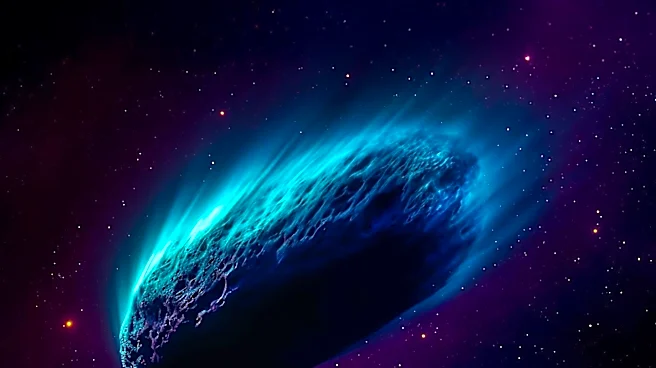
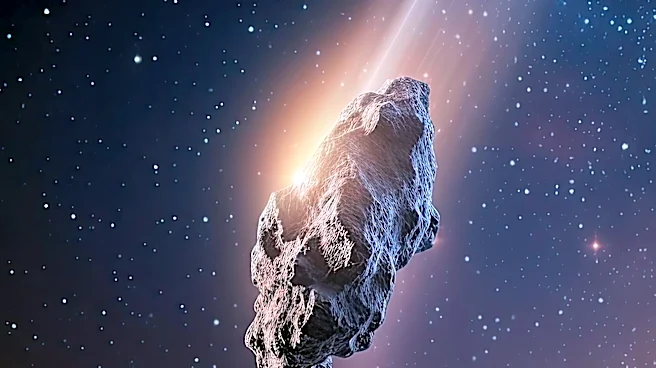
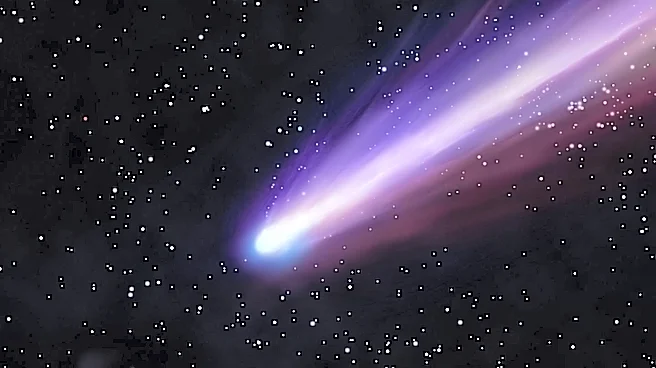
A near-Earth object, previously classified as an asteroid, has been reclassified as a 'dark comet' after it was found to deviate significantly from its predicted path. The object, known as 1998 SH2, exhibited non-gravitational acceleration due to outgassing,
a characteristic of comets. This discovery, confirmed by NASA's Jet Propulsion Laboratory, highlights a potential flaw in current planetary defense models that rely on gravity-only impact risk assessments. The reclassification of 1998 SH2 underscores the need for continuous tracking and analysis of near-Earth objects to ensure accurate impact predictions.
Why It's Important?
The reclassification of 1998 SH2 as a dark comet has significant implications for planetary defense strategies. Current models that assume purely gravitational motion may underestimate the impact risk posed by objects exhibiting comet-like behavior. This discovery suggests that some near-Earth objects classified as asteroids could actually be comets, leading to potential errors in impact probability calculations. The findings emphasize the importance of incorporating non-gravitational perturbation analysis into planetary defense efforts to improve the accuracy of impact risk assessments and enhance global safety measures.
What's Next?
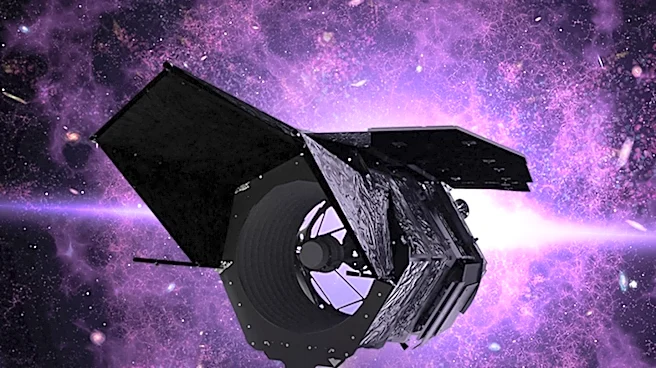
Following the discovery of 1998 SH2's true nature, researchers are advocating for a systematic review of the near-Earth object catalog to identify other potential dark comets. This process involves analyzing existing precision astrometry data to detect non-gravitational perturbations. Additionally, NASA's upcoming NEO Surveyor mission, designed to detect thermal emissions from objects, will play a crucial role in identifying dark comets and improving planetary defense capabilities. The mission aims to provide critical data to safeguard Earth from potential impacts by enhancing the detection and classification of near-Earth objects.