



What's Happening?
President Trump has announced the deployment of Immigration and Customs Enforcement (ICE) agents to major U.S. airports to assist the Transportation Security Administration (TSA) amid a funding lapse that has left TSA workers unpaid. This decision comes
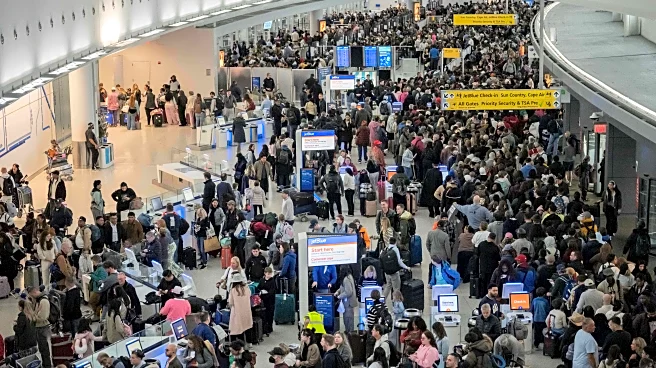
as Congress has failed to renew funding for the Department of Homeland Security (DHS), resulting in significant delays and long security lines at airports. The deployment is intended to alleviate the strain on TSA agents, who have been working without pay, and to manage the growing security concerns. ICE agents will not perform TSA screening duties but will assist in other security roles to expedite the process. The Senate is also advancing the nomination of Senator Markwayne Mullin as the new DHS secretary, with a confirmation vote expected soon.
Why It's Important?
The deployment of ICE agents to airports highlights the severe impact of the DHS funding lapse on national security and public convenience. The situation underscores the broader political standoff between Democrats and Republicans over immigration policies and federal funding priorities. The decision to use ICE agents, typically associated with immigration enforcement, in airport security roles may raise concerns about the militarization of civilian spaces and the potential for increased tensions at airports. The ongoing funding dispute affects not only TSA workers but also the traveling public, airlines, and the broader economy, as prolonged security delays could deter travel and impact airline operations.
What's Next?
The immediate next steps include finalizing the deployment plan for ICE agents, with a focus on airports experiencing the longest wait times. The Senate is expected to vote on the confirmation of Markwayne Mullin as DHS secretary, which could influence future negotiations on DHS funding. Bipartisan talks in the Senate continue, but no resolution appears imminent. The situation may escalate if TSA absenteeism increases, potentially leading to more severe disruptions in air travel. Stakeholders, including airline executives and political leaders, are likely to continue advocating for a resolution to the funding impasse to prevent further economic and security repercussions.