



What's Happening?
A recent study from Northwestern University indicates that even a minimal annual increase of 0.03% in Chicago's tree canopy could prevent over 100 deaths citywide by mitigating the effects of extreme heat. The research, published on August 5 in the scientific
journal GeoHealth, also found a correlation between increased tree canopy cover in Chicago neighborhoods and lower death rates, specifically reducing the risk of mortality from heart, lung, mental health, and certain musculoskeletal conditions. This comes as Chicago's average summer temperatures have risen by 1.9 degrees since 1970, with average summer night lows increasing by at least 2.5 degrees, contributing to successive heat waves. As of mid-August, Cook County has reported at least 12 heat-related deaths this year, with nine occurring in Chicago's South and West sides. The study emphasizes the critical need to protect existing mature trees, which are increasingly vulnerable to severe storms intensified by climate change.
Why It's Important?
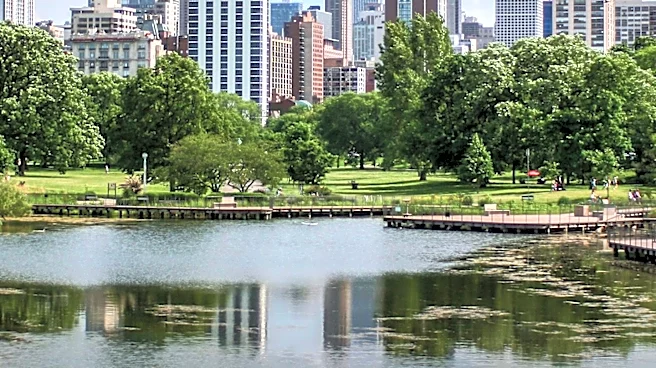
This study highlights a significant public health and urban planning challenge for U.S. cities facing climate change. The findings underscore the immediate and long-term benefits of urban forestry in combating the urban heat island effect, where cities become significantly warmer than surrounding rural areas due to heat-absorbing infrastructure. For Chicago, a city that experienced a decline in its tree canopy cover from 19% to 16% between 2010 and 2020, the research provides a clear, actionable strategy to improve public health outcomes, particularly in vulnerable communities. The economic implications are also substantial, as heat-related illnesses lead to increased healthcare costs and reduced productivity. Investing in tree canopy expansion and maintenance can offer a cost-effective solution to these issues, improving quality of life and reducing mortality rates, especially in neighborhoods with higher rates of underlying health conditions exacerbated by heat.
What's Next?
The city of Chicago has set a goal to plant 75,000 trees by the end of 2026, prioritizing high-need neighborhoods. While the city has made progress, planting approximately 18,000 trees in 2022, 25,000 in 2023, 17,000 in 2024, and 9,000 last year, the study suggests that tree maintenance and preservation are equally, if not more, important than new plantings. City departments are working on developing tree preservation measures, including an ordinance for heritage trees and standards for excavation near trees. Residents are encouraged to request tree plantings via 311. The ongoing efforts will need to balance new tree installations with robust maintenance strategies to ensure the long-term survival and effectiveness of the urban forest in mitigating heat-related health risks, especially as climate change continues to intensify severe weather events that threaten existing tree canopies.
Beyond the Headlines
The study's findings extend beyond immediate health benefits, touching upon issues of environmental justice and urban equity. The research revealed that while some South and West Side neighborhoods have higher-than-average tree canopy cover, they also experience faster rates of canopy loss, leading to increased mortality risks. Conversely, wealthier North Side neighborhoods, despite having lower overall tree canopy, experience less loss and lower mortality rates, partly due to socioeconomic resources, healthcare access, and proximity to Lake Michigan. This disparity underscores the need for equitable distribution of green infrastructure and maintenance efforts. The emphasis on mature trees also highlights a generational responsibility, as current canopies are a legacy from past generations, and their preservation is crucial for future urban resilience. The interdisciplinary approach of the Defusing Disasters Working Group at Northwestern's Buffett Institute for Global Affairs, which conducted this study, exemplifies the collaborative effort required from climatologists, medical experts, and city leaders to address complex climate-related challenges.