
What's Happening?
The Lebanese military has announced the completion of the first phase of its plan to deploy across southern Lebanon and disarm non-state groups, particularly Hezbollah. This initiative follows a Washington-brokered
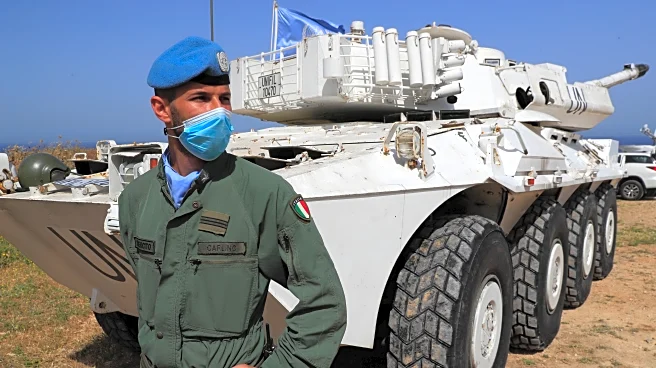
ceasefire that ended a conflict between Hezbollah and Israel in 2024. The military's efforts are focused on clearing the area south of the Litani River of non-state weapons, including tunnels and rocket-launching positions. The Lebanese government, led by President Joseph Aoun and Prime Minister Nawaf Salam, has prioritized disarming these groups since the ceasefire. Regular meetings are being held with Israeli, U.S., French, and U.N. peacekeeping forces to monitor the situation. The next phase of the disarmament plan will target areas between the Litani and Awali Rivers, including the port city of Sidon, although no timeline has been set.
Why It's Important?
The disarmament of Hezbollah and other non-state groups is crucial for Lebanon's stability and reconstruction efforts following the 2024 conflict. The Lebanese military's actions aim to prevent these groups from rebuilding their military capabilities, which could lead to renewed hostilities with Israel. The initiative also seeks to attract international financial support for Lebanon's reconstruction. However, Israel's ongoing strikes and control of strategic hilltops pose challenges to the disarmament process. Hezbollah's cooperation is limited, as it demands an end to Israeli strikes and withdrawal from Lebanese territory before further disarmament discussions. The situation remains tense, with the potential for escalation if these issues are not resolved.
What's Next?
The Lebanese military plans to announce the next stages of the disarmament plan soon, focusing on areas between the Litani and Awali Rivers. Continued cooperation with international partners, including the U.S., France, and U.N. peacekeeping forces, will be essential to monitor and support the disarmament efforts. The Lebanese government will need to navigate the complex political landscape, balancing internal pressures and external threats. The success of the disarmament plan could significantly impact Lebanon's political and economic future, potentially reducing regional tensions and fostering stability.
Beyond the Headlines
The disarmament initiative highlights the broader geopolitical dynamics in the Middle East, where non-state actors like Hezbollah play significant roles. The Lebanese military's efforts reflect a shift towards strengthening state institutions and reducing the influence of armed groups. This development could alter the balance of power within Lebanon, affecting Hezbollah's political clout and its relationship with Iran. The situation also underscores the importance of international diplomacy in resolving regional conflicts and supporting post-conflict reconstruction.