

What's Happening?
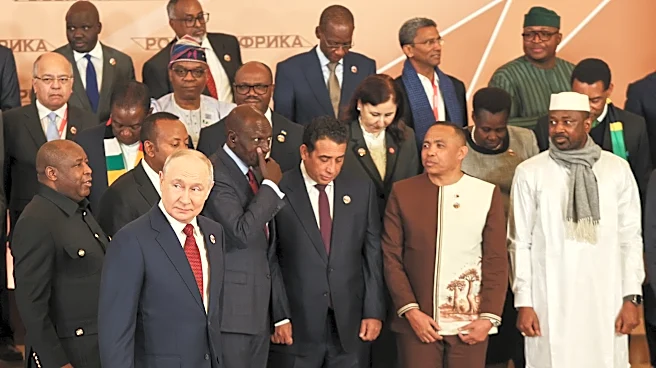
On October 30, 2026, President Faustin-Archange Touadéra of the Central African Republic (CAR) was received by Russian President Vladimir Putin at the Kremlin in Moscow. The bilateral meeting, which included a CAR delegation, focused on enhancing cooperation
between the two nations. President Touadéra expressed gratitude for Russia's support and emphasized his country's desire to solidify a partnership based on sovereignty and equality. He highlighted the importance of continuing this mutually beneficial cooperation, especially given the context of a severe security crisis in the CAR when diplomatic relations between Bangui and Moscow resumed. The CAR President advocated for expanding collaboration into various sectors, including the economy, education, natural resource processing, humanitarian aid, and digital technology. This meeting took place during the third Russia-Africa Summit, signaling a new phase in the development of relations between Moscow and African countries. The bilateral discussion between Presidents Putin and Touadéra concluded the proceedings of the third Russia-Africa Summit, held at the Grand Kremlin Palace.
Why It's Important?
This meeting underscores Russia's continued strategic engagement in Africa, particularly with countries like the Central African Republic. For the CAR, strengthening ties with Russia provides crucial support, especially in security, given the historical context of internal crises. The emphasis on expanding cooperation beyond security to economic, educational, and technological sectors suggests a broader, more integrated partnership. This could lead to increased Russian investment and influence in the CAR's economy, potentially impacting resource extraction and infrastructure development. For Russia, such engagements are vital for expanding its geopolitical footprint, securing access to resources, and building alliances on the African continent, potentially challenging the influence of traditional Western powers. The discussions on natural resource processing and digital technology could also signify Russia's interest in leveraging CAR's raw materials and contributing to its technological development, thereby deepening economic interdependence.
What's Next?
Following this high-level meeting, it is anticipated that specific agreements and initiatives will be pursued to implement the discussed areas of cooperation. The CAR government will likely work with Russian counterparts to develop detailed plans for collaboration in economic development, education, natural resource transformation, humanitarian efforts, and digital advancements. This could involve the signing of new bilateral agreements, the establishment of joint ventures, or the deployment of Russian expertise and resources in the CAR. Further discussions may also occur regarding security cooperation, potentially involving military training or equipment provisions. The broader context of the Russia-Africa Summit suggests that this bilateral engagement is part of a larger, ongoing effort by Russia to solidify its relationships across the African continent, indicating that similar high-level interactions and partnership expansions may follow with other African nations.
Beyond the Headlines
The deepening relationship between the Central African Republic and Russia carries significant geopolitical implications. It reflects a broader trend of African nations diversifying their international partnerships beyond traditional Western allies, seeking support from emerging global powers. This shift could alter regional power dynamics and influence the CAR's foreign policy orientation. The focus on natural resource processing and industrialization, while potentially beneficial for the CAR's economic development, also raises questions about the terms of such engagements and their long-term impact on local economies and environmental sustainability. Furthermore, the continued Russian presence, particularly in security, could be viewed differently by various international actors, potentially leading to increased scrutiny or competition for influence in the region. This evolving partnership highlights the complex interplay of security, economic development, and geopolitical strategy in contemporary international relations.