



What's Happening?
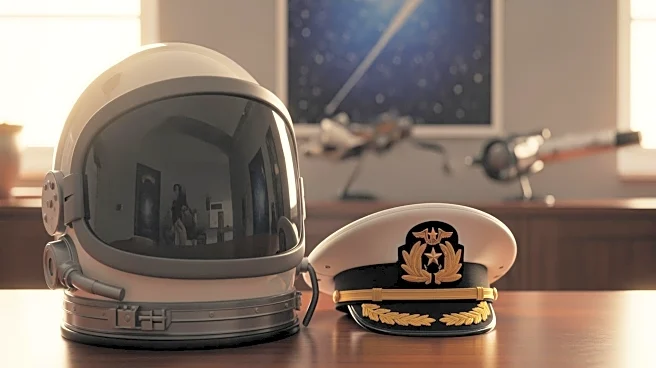
NASA astronaut Suni Williams has announced her retirement after a distinguished 27-year career that included significant contributions to human spaceflight. Williams, a former Navy captain, logged 608 days in space, making her second on the list of cumulative
time spent in space by a NASA astronaut. She also ranks sixth for the longest single spaceflights by an American, tied with Butch Wilmore, both having spent 286 days in orbit during NASA's Boeing Starliner and SpaceX Crew-9 missions. Williams was part of the first crewed Starliner mission to the International Space Station in 2024, which extended from a planned 10-day mission to over nine months due to a thruster system issue. During her time in space, she completed nine spacewalks, totaling 62 hours and 6 minutes, the most for any female astronaut. Williams was also the first person to complete a triathlon and marathon in space, using a stationary bike, treadmill, and strength-training machine to simulate the race experience.
Why It's Important?
Suni Williams' retirement marks the end of a significant era in NASA's human spaceflight program. Her extensive experience and achievements have contributed to the advancement of space exploration, particularly in long-duration missions and extravehicular activities. Williams' career highlights the critical role of astronauts in testing and overcoming the challenges of extended space travel, which is essential for future missions to the moon and Mars. Her pioneering efforts in completing athletic events in space also demonstrate the potential for maintaining physical health during prolonged missions, a key consideration for future interplanetary travel. Williams' legacy will likely inspire future generations of astronauts and contribute to the ongoing development of space exploration technologies and strategies.
What's Next?
With Williams' retirement, NASA will continue to focus on its Artemis program, aiming to return humans to the moon and eventually send astronauts to Mars. The experience and data gathered from Williams' missions will inform future strategies for long-duration space travel and the development of new technologies to support these missions. NASA will also continue to train and prepare new astronauts to carry forward the legacy of exploration and innovation that Williams and her colleagues have established. The agency's collaboration with commercial partners like SpaceX and Boeing will be crucial in advancing these goals, as they work together to overcome the technical and logistical challenges of deep space exploration.
Beyond the Headlines
Williams' career underscores the evolving role of women in space exploration, breaking barriers and setting new records in a field historically dominated by men. Her achievements highlight the importance of diversity and inclusion in advancing scientific and technological frontiers. As more women enter the field, the unique perspectives and skills they bring will continue to enrich the space program and drive innovation. Williams' story also emphasizes the importance of international collaboration in space exploration, as her missions often involved working with astronauts from other countries aboard the International Space Station. This spirit of cooperation will be vital as humanity embarks on more ambitious endeavors beyond Earth's orbit.