






What's Happening?
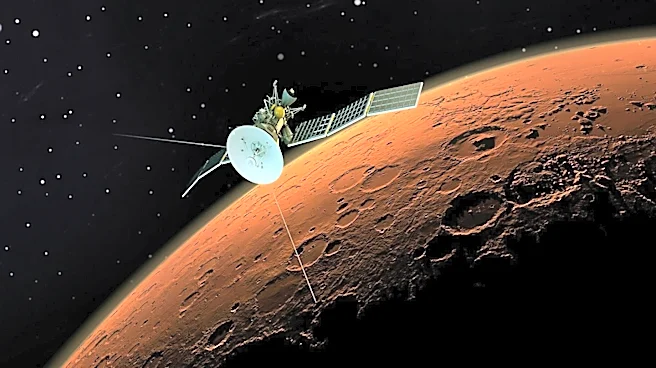
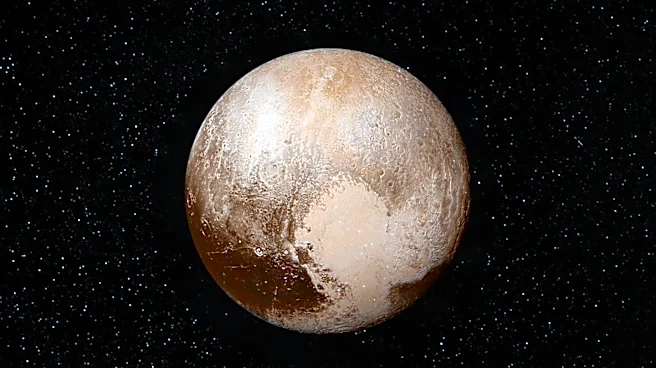
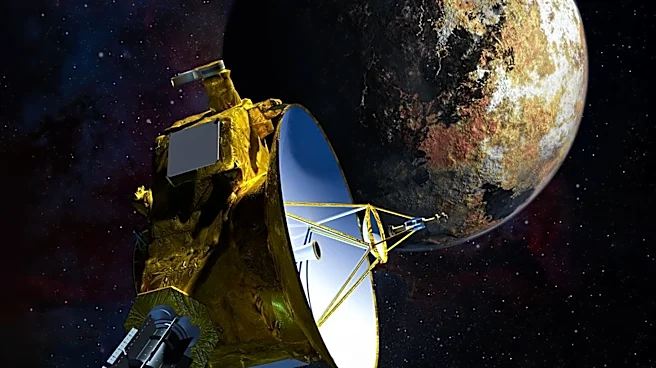
NASA's New Horizons spacecraft has awakened from a planned hibernation to continue its mission in the Kuiper Belt, a region of icy objects at the edge of the solar system. The spacecraft, which previously conducted a detailed flyby of Pluto, is now transmitting
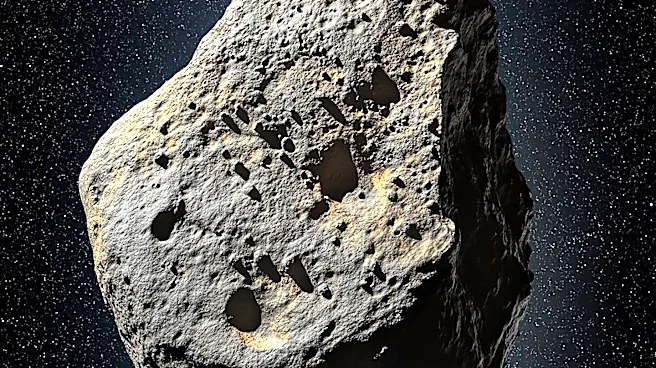
data from its location 5.9 billion miles from Earth. New Horizons is exploring trans-Neptunian objects, providing insights into the formation of planets and the solar system. The mission is set to continue until 2029, with the potential for extension if the spacecraft remains healthy.
Why It's Important?
The New Horizons mission is significant for understanding the outer solar system and the Kuiper Belt, which contains remnants from the solar system's formation. The data collected by New Horizons can help scientists learn about the composition and behavior of these distant objects, offering clues about planetary formation processes. The mission also contributes to our knowledge of cosmic rays and the heliosphere, which protects the solar system from harmful particles. This research is vital for future space exploration and understanding the universe's structure.
What's Next?
As New Horizons continues its journey, it will gather more data on Kuiper Belt objects, potentially uncovering new discoveries about their composition and behavior. The mission's trajectory may eventually take it into interstellar space, following in the footsteps of the Voyager probes. NASA plans to use the data from New Horizons to refine models of planetary formation and the solar system's evolution. The mission's findings could influence future exploration strategies and the search for life beyond Earth.