
What's Happening?
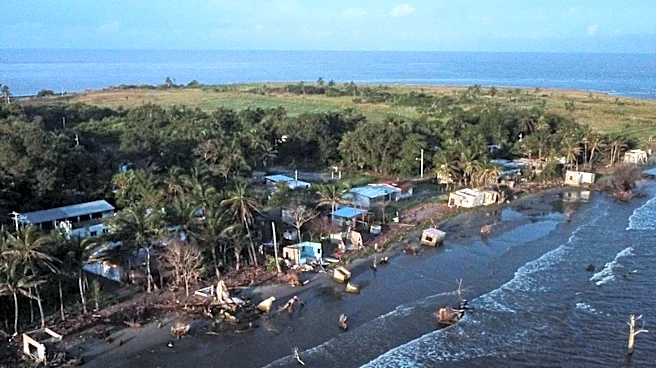
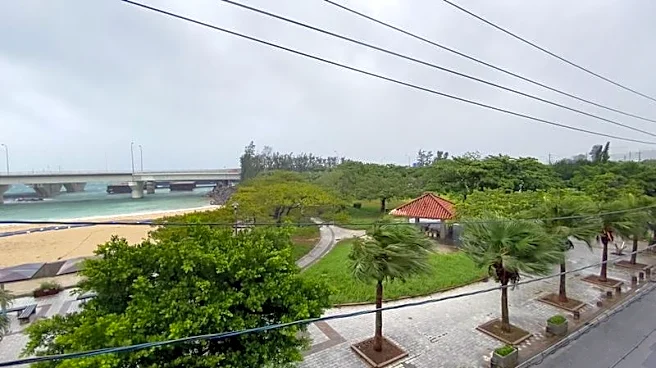
Typhoon Dolphin, after impacting Japan's Okinawa, is now heading towards China's eastern coast. The storm has already caused injuries and power outages in Japan and is expected to bring heavy rain and strong
winds to eastern China, including Shanghai and neighboring provinces. Authorities have declared a level-three emergency response, the second lowest level, and have taken precautionary measures such as halting port operations and suspending ferry routes in Zhejiang province. The typhoon is anticipated to make landfall between Zhoushan city in Zhejiang province and Fuding city in Fujian province between late Sunday and early Monday. In response, Ningbo has closed schools and suspended flights, while Shanghai's Yangshan port has been cleared of vessels.
Why It's Important?
The approach of Typhoon Dolphin is significant due to its potential impact on China's densely populated eastern regions, which are crucial economic hubs. The suspension of port operations and ferry routes could disrupt trade and logistics, affecting both local and international supply chains. Additionally, the heavy rainfall and strong winds pose risks to infrastructure and public safety, necessitating emergency preparedness and response efforts. The situation also highlights the ongoing challenges posed by extreme weather events in the context of climate change, emphasizing the need for robust disaster management strategies.
What's Next?
As Typhoon Dolphin approaches, authorities in China are likely to continue monitoring the storm's path and adjust emergency measures as needed. The focus will be on minimizing disruptions and ensuring public safety through timely evacuations and infrastructure protection. The aftermath of the typhoon will require assessment of damages and potential recovery efforts, particularly in affected coastal areas. The international community may also observe China's response to the typhoon as part of broader discussions on climate resilience and disaster management.