



What's Happening?
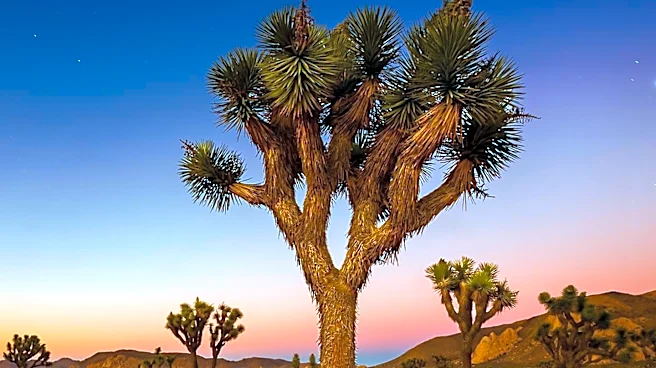
Joshua Tree National Park, located in southeastern California across parts of Riverside and San Bernardino Counties, is open 24 hours a day, 7 days a week, throughout the year. The park, named for its endemic Joshua trees, was initially designated a national
monument in 1936 and later became a national park in 1994 following the passage of the California Desert Protection Act. Visitation to the park typically increases in the fall, reaches its peak during the spring wildflower season, and decreases during the summer due to high temperatures. While most of the park is accessible at all times, certain areas are designated for day use only. Visitors can engage in a variety of activities, including stargazing, hiking in the Cholla Cactus Garden, exploring Skull Rock, participating in Ranger Strolls, and birding. The park offers diverse landscapes and unique geological formations, making it a popular destination for outdoor enthusiasts.
Why It's Important?
Joshua Tree National Park plays a significant role in U.S. national park conservation efforts, preserving a unique desert ecosystem and its distinctive flora and fauna, most notably the Joshua tree. Its year-round accessibility makes it a consistent draw for tourism in Southern California, contributing to the local economy through visitor spending on accommodations, food, and other services. The park's popularity, particularly during peak seasons, highlights the public's interest in natural landscapes and outdoor recreation, which can influence funding and policy decisions for national parks. The park also serves as an important site for scientific research on desert ecosystems, climate change impacts, and biodiversity. Its designation as a national park underscores the federal commitment to protecting and making accessible significant natural and cultural resources for current and future generations.
What's Next?
As visitation continues to fluctuate with seasonal changes, park management will likely focus on managing visitor impact, especially during the busy spring wildflower season and fall. This may involve ongoing efforts to maintain trails, facilities, and educational programs like Ranger Strolls. The park will also continue to monitor environmental conditions, particularly concerning the health of the Joshua tree population, which is sensitive to climate shifts. Future initiatives might include further development of interpretive programs to enhance visitor understanding of the desert environment and conservation needs. Additionally, the park may explore strategies to distribute visitor traffic more evenly throughout the year or across different areas to minimize ecological strain on popular sites, ensuring the long-term preservation of its unique natural features.
Beyond the Headlines
Beyond its immediate recreational appeal, Joshua Tree National Park represents a critical ecological sanctuary in the rapidly developing American Southwest. The park's unique biodiversity, including its namesake Joshua trees, faces ongoing threats from climate change, invasive species, and human encroachment. The park serves as a living laboratory for understanding desert adaptation and resilience, offering insights into broader environmental challenges. Its cultural significance also extends to indigenous histories and the artistic communities it has inspired. The balance between providing public access and ensuring ecological preservation is a continuous challenge, reflecting broader debates about land use, conservation ethics, and the role of protected areas in a changing world. The park's enduring popularity underscores a societal need for connection with nature and wilderness experiences.