



What's Happening?
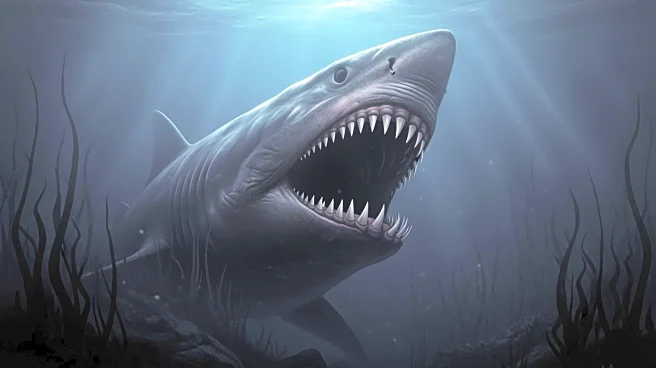
Researchers have discovered vertebrae of a gigantic shark species, known as cardabiodontids, that lived 115 million years ago, predating the megalodon. These vertebrae were found near Darwin, Australia, and suggest that these sharks were the earliest
known mega-predators of the modern shark lineage. The study, published in Communications Biology, indicates that these sharks were about 26 feet long, larger than the ancestors of today's great white sharks. The discovery pushes back the timeline for when these enormous sharks existed, providing new insights into the evolution of marine predators during the Cretaceous period.
Why It's Important?
This discovery is significant as it provides a deeper understanding of the evolutionary history of sharks, highlighting the diversity and adaptability of these ancient predators. By studying these ancient ecosystems, scientists can gain insights into how current species might respond to environmental changes. The findings also underscore the importance of paleontological research in uncovering the history of life on Earth, offering clues about past biodiversity and climate shifts that could inform future ecological studies.