






What's Happening?
Joshua Tree National Park, situated in Southern California's high desert, is a popular destination approximately two and a half hours from Los Angeles and an hour from Palm Springs International Airport. The park features three entrances: West (near the town
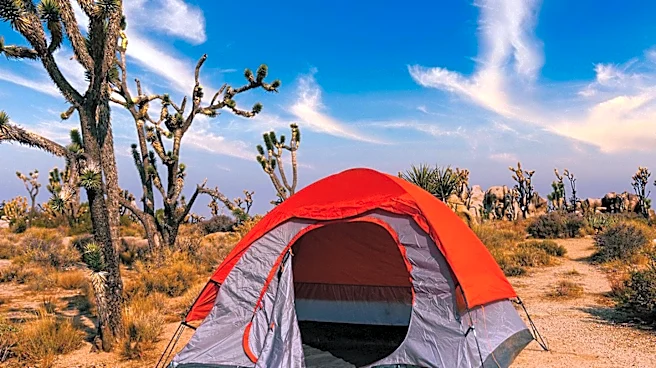
of Joshua Tree), North (near Twentynine Palms), and South (off I-10 near Cottonwood). Visitors can engage in a variety of activities, including hiking trails like the Hidden Valley Nature Trail, Cholla Cactus Garden, and Arch Rock. The park is also known for its stargazing opportunities as an International Dark Sky Park, with designated areas such as Quail Springs and Hidden Valley. For those interested in history, the Wall Street Mill Trail offers a glimpse into past mining operations. Accommodation within the park is limited to eight campgrounds, five of which are reservable up to six months in advance. Nearby towns like Joshua Tree, Yucca Valley, and Twentynine Palms provide additional lodging options, including budget motels and vacation rentals, while Palm Springs, about 45 minutes away, offers more extensive hotel choices.
Why It's Important?
Joshua Tree National Park's accessibility from major Southern California urban centers makes it a significant natural escape for residents and tourists, contributing to regional tourism and local economies. The park's unique desert ecosystem, characterized by its distinctive Joshua trees and geological formations, offers educational and recreational value, promoting environmental awareness and outdoor activities. The availability of various accommodation types, from rustic camping to luxury glamping and nearby town hotels, caters to a broad spectrum of visitors, impacting local hospitality and service industries. Its status as an International Dark Sky Park highlights the importance of preserving natural nightscapes, attracting astrotourism and supporting scientific observation. The park's diverse offerings, including hiking, rock climbing, and historical sites, underscore its role in providing varied recreational experiences and preserving cultural heritage.
What's Next?
Visitors planning a trip to Joshua Tree National Park should consider the best times to visit, with spring (March-May) and fall (September-November) offering the most favorable weather conditions for activities like hiking and photography. Reservations for the five reservable campgrounds open six months in advance and tend to fill quickly, especially during peak seasons. For those seeking alternative lodging, nearby towns will continue to offer a range of options, and it is advisable to book in advance. The park's visitor centers will remain a key resource for information on ranger programs, current conditions, and Junior Ranger activities for children. Continued efforts to manage visitor flow and preserve the park's natural resources will be ongoing, particularly given its popularity and the need to balance access with conservation.
Beyond the Headlines
The allure of Joshua Tree National Park extends beyond its recreational offerings, touching upon themes of environmental conservation, sustainable tourism, and the appreciation of unique natural landscapes. The park's distinct beauty, often described as otherworldly, inspires artists, photographers, and nature enthusiasts, fostering a cultural connection to the desert environment. The challenge of balancing increasing visitor numbers with the delicate ecosystem's preservation is a continuous concern, prompting discussions on park management strategies and visitor education. The contrast between the park's serene natural environment and the bustling urban centers it serves highlights the growing need for accessible natural spaces for mental well-being and outdoor recreation. Furthermore, the park's role in showcasing the resilience of desert flora and fauna provides valuable insights into adaptation and survival in extreme conditions, contributing to broader ecological understanding.