







What's Happening?
The United States Department of Agriculture (USDA) has inaugurated the Knipling-Bushland U.S. Livestock Insects Research Laboratory, a state-of-the-art facility aimed at bolstering the cattle industry's defenses against invasive pests such as flies and ticks.
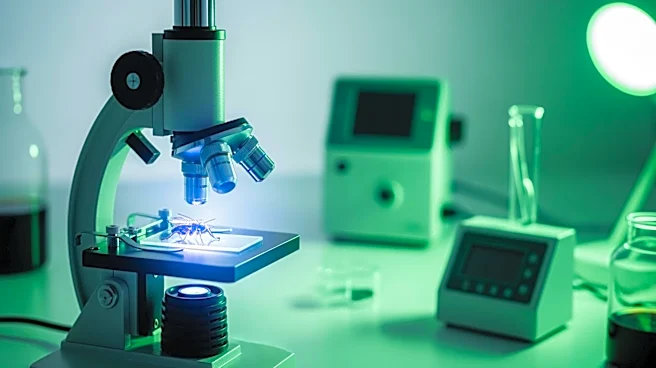
This new laboratory, located in Kerrville, Texas, spans 52,000 square feet and is equipped with advanced research spaces, cattle facilities, and a genomics center. The facility is designed to enhance the study of insect behavior, improve pest control techniques, and develop new insecticides and pesticide delivery systems. The lab will also focus on reducing pest resistance, thereby supporting the health and productivity of American livestock. The USDA emphasizes the importance of this facility in continuing efforts to protect livestock from threats like the New World Screwworm, a pest previously eradicated from the U.S. using the Sterile Insect Technique.
Why It's Important?
The opening of this research lab is significant for the U.S. cattle industry, which is a crucial component of the nation's agricultural economy. By developing more effective pest control methods, the USDA aims to safeguard livestock health, ensuring that ranches remain productive and profitable. The facility's work is expected to have a long-term impact on food security by protecting the food supply chain from pest-related disruptions. Additionally, the research conducted at this lab will contribute to the development of innovative pest management strategies, potentially reducing the reliance on chemical pesticides and promoting sustainable agricultural practices. This initiative reflects the USDA's commitment to maintaining the competitiveness of the U.S. cattle industry in the global market.
What's Next?
The USDA plans to utilize the advanced capabilities of the Knipling-Bushland lab to continue its research on invasive pests and develop new strategies for pest management. The facility will support ongoing efforts to keep pests like the New World Screwworm out of the United States and may lead to the discovery of novel pest control methods. As research progresses, the USDA is likely to collaborate with other agricultural stakeholders to implement findings and enhance pest control measures across the industry. The lab's work will also inform policy decisions related to agricultural pest management and biosecurity.
Beyond the Headlines
The establishment of this research lab highlights the broader issue of biosecurity in agriculture, emphasizing the need for continuous innovation in pest management. The facility's focus on genomics and advanced research techniques represents a shift towards more scientific and data-driven approaches in agriculture. This development may also influence educational and training programs for future entomologists and agricultural scientists, fostering a new generation of experts equipped to tackle emerging pest threats. Furthermore, the lab's work could have implications for international trade, as effective pest control is essential for maintaining export standards and market access.