


What's Happening?
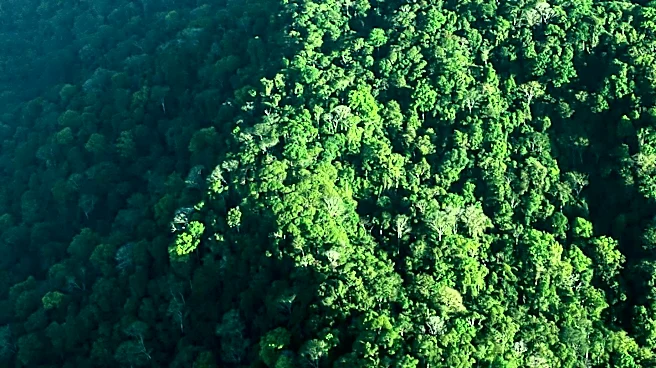
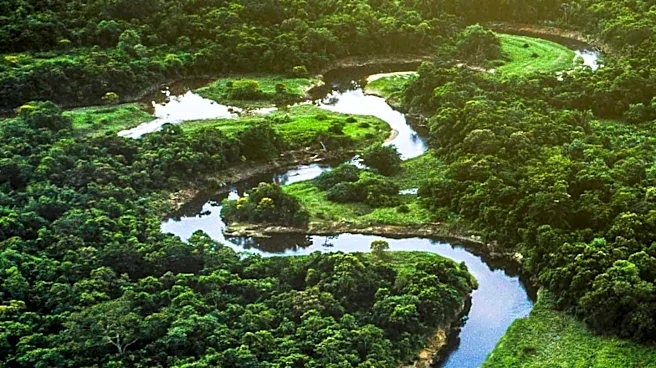
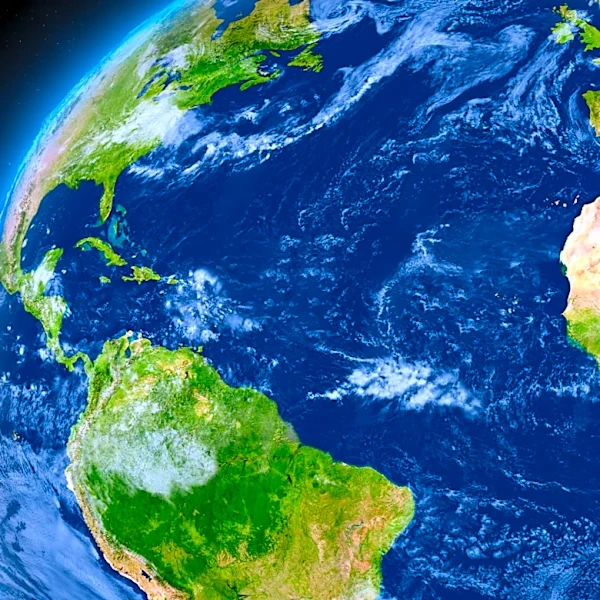
The Amazon rainforest is characterized by unique 'flying rivers,' which are atmospheric currents that transport moisture released by the forest for hundreds to thousands of miles. This phenomenon is vital for generating rainfall within the Amazon Basin
and in distant regions. Trees in the Amazon draw water from the soil, releasing it as vapor through transpiration, a process that, along with evaporation from other surfaces, is known as evapotranspiration. This moisture then forms clouds and falls as rain, with some of it being reabsorbed by vegetation, perpetuating the cycle. While the Atlantic Ocean is a significant moisture source, a considerable portion of rainfall within the Amazon, up to 50% in some areas, depends on this internal moisture recycling. Dr. Wei Weng, Assistant Professor at National Taiwan University, highlights that these 'flying rivers' are preferential pathways of moisture transport, often directed towards the La Plata Basin, making regions like Bolivia and Peru particularly reliant on Amazonian moisture.
Why It's Important?
The 'flying rivers' of the Amazon are critical for maintaining the rainforest's biodiversity and supporting ecosystems far beyond its borders. The continuous movement of water between the land and atmosphere, facilitated by these aerial rivers, allows the rainforest to thrive even thousands of kilometers from the ocean. However, extensive deforestation poses a significant threat to this delicate balance. Modeling by Dr. Wei Weng indicates that deforestation in upwind areas can lead to a 5 to 13 percent reduction in annual rainfall and a 19 to 50 percent decrease in annual runoff in downwind regions. Across the Amazon, widespread deforestation could reduce annual rainfall by 6 to 18 percent. This creates a feedback loop where forest loss leads to drier conditions, making the remaining forest more susceptible to drought and degradation. The location of deforestation is as crucial as its extent, with clearing in critical upwind areas potentially having a disproportionately large effect on downwind moisture supply, accelerating ecological changes in vulnerable regions.
What's Next?
Scientists are actively debating the exact 'tipping point' for the Amazon, beyond which the damage to its hydrological cycle could become irreversible. The ongoing research emphasizes the need for strategic forest restoration in important upwind areas to strengthen atmospheric moisture recycling and improve water availability downwind. Such efforts could help mitigate the negative impacts of deforestation and support the long-term health of the Amazon and the regions dependent on its 'flying rivers.' Continued monitoring and modeling of atmospheric moisture transport will be essential to understand and predict the consequences of land-use changes on regional climate patterns and water resources.
Beyond the Headlines
The concept of 'flying rivers' underscores the profound interconnectedness of ecosystems and atmospheric processes on a continental scale. It highlights that the Amazon rainforest is not merely a local biome but a global climate regulator, influencing weather patterns and water availability across South America and potentially beyond. The opposing directions of surface rivers (eastward) and atmospheric moisture (inland) create a unique and efficient water exchange system. The potential for a feedback loop, where deforestation leads to drier conditions, further exacerbates forest loss, presents a critical environmental and ethical challenge. This phenomenon also raises questions about the responsibility of nations and industries whose activities contribute to deforestation, given the far-reaching consequences on water security and climate stability for other regions.