






What's Happening?
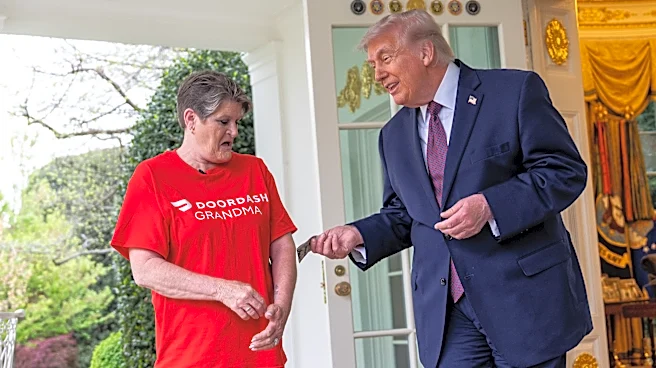
President Trump engaged in a conversation with Sharon Simmons, a DoorDash delivery driver, during a visit to the White House. The interaction occurred as Simmons delivered McDonald's food to the West Wing staff. Trump asked Simmons her opinion on whether
men should play in women's sports, a topic he has frequently addressed in his critiques of Democratic policies. Simmons, who was there to discuss the 'no tax on tips' initiative, sidestepped the question, stating she had no opinion on the matter. The 'no tax on tips' initiative, part of the One Big Beautiful Bill Act signed by Trump, allows workers to deduct up to $25,000 of qualified tips from their income taxes annually. This policy is aimed at benefiting workers with incomes under $150,000. Simmons, a grandmother from Arkansas, has been working with DoorDash since 2022 and has benefited significantly from the tax break, saving over $11,000.
Why It's Important?
The interaction highlights ongoing debates over transgender athletes' participation in women's sports, a contentious issue in U.S. politics. President Trump and many Republicans have used this topic to criticize Democratic policies, framing it as a matter of fairness in sports. The 'no tax on tips' initiative is a significant part of Trump's economic agenda, designed to support low-income workers by reducing their tax burden. This policy has garnered bipartisan support, reflecting its potential impact on a wide range of American workers. The conversation also underscores the political strategy of using high-profile interactions to draw attention to specific policy initiatives and social issues.
What's Next?
As the 2026 midterm elections approach, the issue of transgender athletes in sports is likely to remain a focal point in political discourse. Republicans may continue to emphasize this topic to rally their base and challenge Democratic positions. The 'no tax on tips' initiative will continue to be a talking point for the Trump administration, highlighting its benefits to workers like Simmons. The broader implications of these discussions could influence voter sentiment and policy debates leading up to the elections.