
What's Happening?
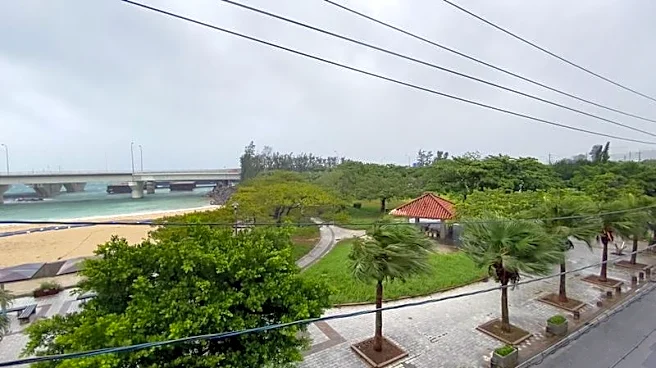
Typhoon Dolphin has impacted Japan's Okinawa Prefecture, causing injuries to five people and power outages affecting 14,000 buildings. The storm, with maximum sustained winds of 162 kph and gusts up to 216
kph, is moving northwest and is expected to make landfall on China's eastern coast between late Sunday and early Monday. In anticipation, China has shut down ports and ferry routes, with Zhejiang province raising its coastal typhoon alert to the highest level. The storm is expected to bring heavy rain and strong winds to eastern China, including Shanghai and neighboring provinces, with some areas potentially receiving over 600 millimeters of rain.
Why It's Important?
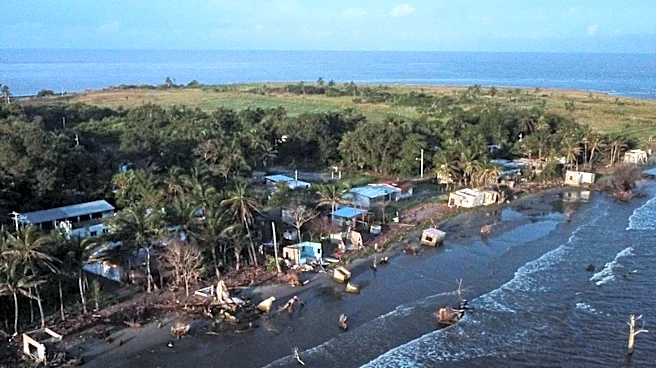
The impact of Typhoon Dolphin highlights the vulnerability of coastal regions in Asia to severe weather events. In Okinawa, the storm has already caused injuries and significant power outages, disrupting daily life and local infrastructure. As the typhoon approaches China, the potential for widespread disruption is significant, with major ports and transportation routes already affected. The economic implications are considerable, as these regions are critical hubs for trade and industry. The response to the typhoon also underscores the importance of effective disaster preparedness and response strategies in mitigating the impact of such natural disasters.
What's Next?
As Typhoon Dolphin continues its path, authorities in China and Japan will focus on emergency response and recovery efforts. In China, the suspension of port operations and ferry routes will likely continue until the storm passes, with potential delays in shipping and logistics. In Japan, efforts will be directed towards restoring power and assessing damage in affected areas. The situation will be closely monitored by meteorological agencies, with updates provided to the public to ensure safety and preparedness. Long-term, this event may prompt further investment in infrastructure resilience and disaster management systems in the region.