





What's Happening?
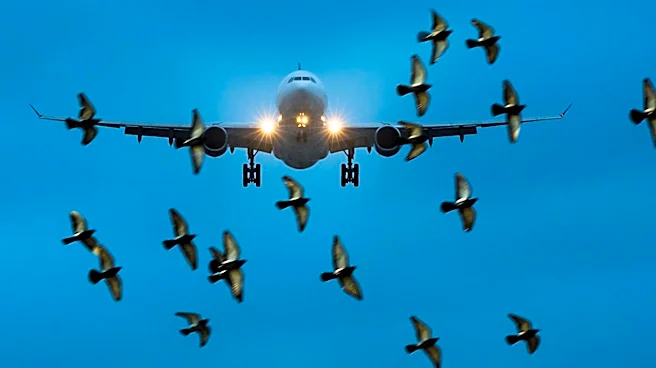
The National Transportation Safety Board (NTSB) has released findings suggesting that bird strikes likely contributed to the crash of a sightseeing helicopter in New York City last year, which resulted in the deaths of six people. The helicopter, which crashed
into the Hudson River on April 10, 2025, showed evidence of multiple bird strikes, including remains of several geese found on the aircraft's rotors and stabilizer. The crash involved a Bell 206L-4 helicopter operated by New York Helicopter Tours, which has since ceased operations. The victims included a Siemens executive from Spain, his family, and the pilot, Seankese Johnson, a U.S. Navy veteran. The NTSB's report is not final but highlights the vulnerability of helicopters to bird strikes due to their low-altitude flights. The incident has renewed safety concerns about sightseeing flights and prompted calls for additional restrictions.
Why It's Important?
The findings underscore the significant risk bird strikes pose to aviation safety, particularly for helicopters operating at low altitudes. This incident highlights the need for enhanced safety measures and regulations to protect against such occurrences. The crash has prompted discussions about the safety of nonessential helicopter flights in densely populated areas like New York City. The potential for bird strikes to cause catastrophic failures in aircraft systems raises concerns for both operators and regulators, emphasizing the importance of implementing preventive technologies and strategies. The incident also serves as a reminder of the broader challenges in managing urban airspace and ensuring the safety of aerial tourism.
What's Next?
The NTSB will continue its investigation to finalize the report and determine any additional safety recommendations. The Federal Aviation Administration (FAA) may consider revising regulations regarding bird strike prevention and helicopter operations in urban areas. There could be increased pressure on tour operators to adopt more stringent safety protocols, including the use of bird deterrent technologies. Additionally, policymakers might explore legislative measures to limit nonessential helicopter flights over cities to mitigate risks. The aviation industry and safety experts will likely engage in discussions to address these challenges and improve overall safety standards.