


What's Happening?
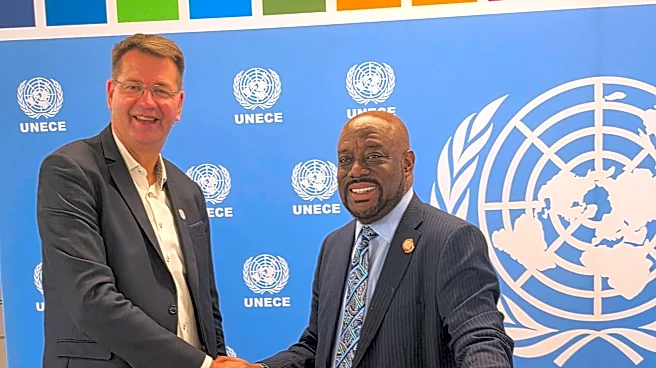
During a high-level panel discussion at the 63rd session of the Human Rights Council in Geneva, human rights education was highlighted as a powerful tool for prevention and participation. Volker Türk, United Nations High Commissioner for Human Rights,
described it as an "effective vaccine against many of society's ills," including hatred, violence, discrimination, and polarization. The discussion, marking the 15th anniversary of the United Nations Declaration on Human Rights Education and Training, brought together government representatives, educators, human rights practitioners, and civil society leaders. Speakers emphasized that human rights education strengthens collective immunity by teaching rights, enabling critical thinking, fostering solidarity, and awakening conscience, thereby stopping societal malignancies at their source. Examples from Colombia, Northern Ireland, and Jordan were cited to demonstrate its effectiveness in peacebuilding and integration. Mongolia's Permanent Representative, Gerelmaa Davaasuren, shared her country's experience, where a revised education law in 2023 made human rights education mandatory at all levels, viewing it as a culture to be cultivated.
Why It's Important?
The emphasis on human rights education as a preventative measure holds significant importance for U.S. society, which grapples with issues of discrimination, polarization, and social division. By fostering critical thinking and solidarity from an early age, human rights education can help build a more inclusive and resilient society. For U.S. educational institutions, this perspective suggests a need to integrate human rights principles more deeply into curricula, moving beyond mere awareness to practical application. This approach can empower individuals to understand their rights and responsibilities, promoting active and informed civic participation. In a diverse nation like the U.S., such education can be instrumental in bridging divides, promoting mutual respect, and addressing systemic inequalities. It can also equip future generations with the tools to critically evaluate information and resist narratives that fuel hatred and discrimination, contributing to a more stable and just democratic society.
What's Next?
The call to action from the Human Rights Council suggests that countries, including the U.S., should move from commitments to practical implementation of human rights education. This could involve policy changes to embed human rights education across all levels of the education system, similar to Mongolia's approach. There may be increased efforts to develop and implement monitoring tools to assess the effectiveness of human rights education in schools and communities. Furthermore, there is a push to move beyond classroom learning, creating opportunities for young people to practice participation, inclusion, and solidarity in their daily lives, as advocated by the World Organization of the Scout Movement. This could lead to more community-based initiatives and youth programs focused on experiential learning in human rights, ensuring that children and young people are not only aware of their rights but also equipped to exercise and uphold them.
Beyond the Headlines
The deeper implication of human rights education lies in its potential to transform societal norms and values over the long term. By cultivating a culture of human rights, it can challenge existing power structures and foster a more equitable distribution of agency. The idea that human rights are not just principles to be taught but experiences to be lived suggests a profound shift in pedagogical approaches, emphasizing experiential learning and active engagement. This can lead to a more empathetic and socially conscious citizenry, capable of identifying and addressing injustices. Moreover, embedding human rights education can contribute to a more robust democratic culture, where individuals are empowered to hold institutions accountable and advocate for their rights. This foundational shift can have lasting impacts on public policy, social justice movements, and the overall health of democratic institutions.