




What's Happening?
The fall equinox is scheduled for September 23, 2026, signifying the official commencement of autumn in the Northern Hemisphere. This astronomical event is characterized by an approximate equality of daylight and darkness, with both lasting around 12
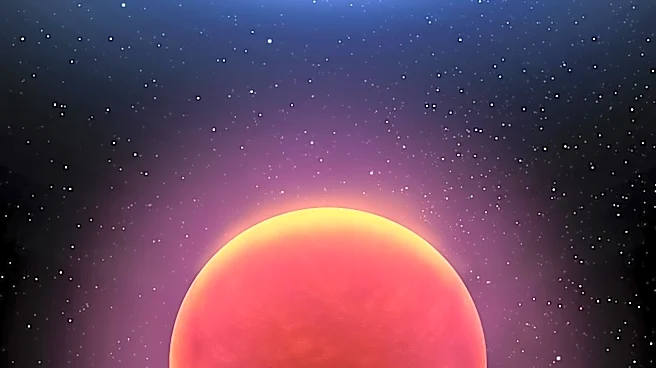
hours. The term 'equinox' originates from Latin words 'aequus' (equal) and 'nox' (night), directly reflecting this balance. During an equinox, the Sun is perfectly aligned with the Earth, and the Earth's rotational axis is not tilted towards or away from the Sun. Consequently, both the Northern and Southern Hemispheres receive an equal amount of sunlight and shadow. This phenomenon occurs twice annually, with the spring equinox on March 20 and the fall equinox on September 23 in the Northern Hemisphere. Conversely, in the Southern Hemisphere, September 23 marks the beginning of spring, and March 20 signals the start of fall.
Why It's Important?
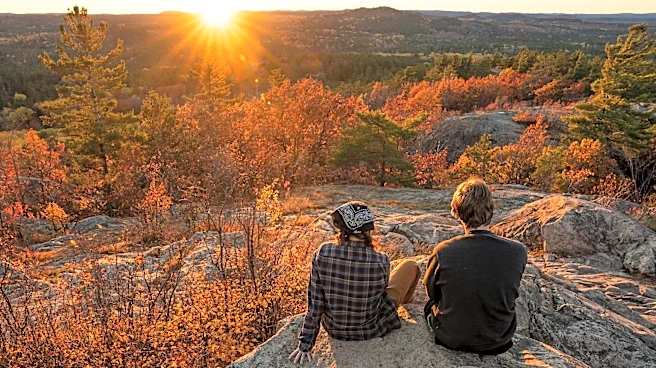
The fall equinox holds cultural and practical significance across various societies. Historically, ancient calendars in the Northern Hemisphere, such as Mesopotamian, Celtic, and Mayan, divided the year into seasons of light and shadow, with equinoxes marking these transitions. The event is widely celebrated globally with festivals and traditions that express gratitude for the final harvests of summer, including crops like apples, squash, and corn. For many, it represents a shift in natural cycles, influencing agricultural practices and daily routines as days progressively shorten until the winter solstice. The equinox also serves as a reminder of the Earth's orbital mechanics and its consistent alignment with the Sun, which dictates seasonal changes and impacts climate patterns, affecting ecosystems and human activities.
What's Next?
Following the fall equinox on September 23, 2026, residents in the Northern Hemisphere will experience progressively shorter days and longer nights. For instance, in Montreal, the sun is projected to set at 6:51 p.m. on the equinox, with sunsets occurring earlier each subsequent day. This trend of diminishing daylight will continue until the winter solstice on December 21, 2026, which marks the longest night of the year. After the winter solstice, the days will gradually begin to lengthen again. Culturally, various celebrations and gatherings are anticipated around the equinox, such as Wiccans observing Mabon, crowds at Stonehenge for sunrise rituals, and observers in Yucatán witnessing the 'Descent of the Serpent' visual effect at Chichén Itzá. These traditions highlight the ongoing human connection to celestial events and seasonal shifts.
Beyond the Headlines
Beyond its astronomical definition, the fall equinox carries deeper implications for human connection to nature and historical understanding. The global observance of this event, from ancient Mesopotamian calendars to modern-day spiritual practices, underscores a universal human need to mark and understand seasonal transitions. These celebrations often reflect themes of gratitude, harvest, and preparation for darker, colder months, linking contemporary society to ancestral agricultural rhythms. The equinox also highlights the precision of celestial mechanics, offering a tangible demonstration of Earth's orbit and axial tilt. This consistent astronomical event has shaped human civilization, influencing not only agricultural practices but also architectural alignments, religious ceremonies, and cultural narratives, demonstrating a profound and enduring relationship between humanity and the cosmos.