







What's Happening?
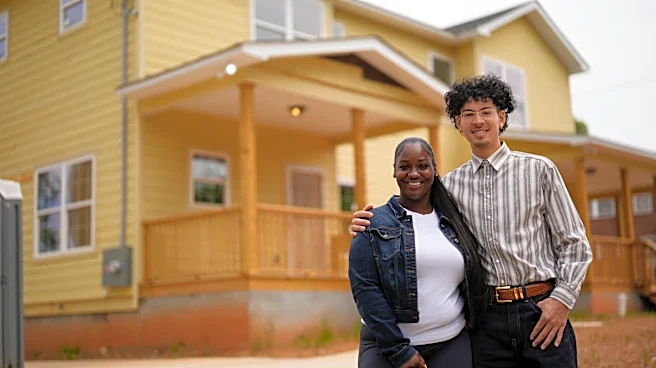
Cepia Harper, a middle school teacher in Atlanta, has returned to working multiple jobs after the conclusion of a basic income program that provided her with $20,400 over two years. The program, part of the 'In Her Hands' initiative, aimed to support
low-income Black women by offering monthly payments of $850. Harper used the funds to secure housing, afford groceries, and support her children's activities. Despite the end of the program, Harper feels more financially stable, having obtained a new teaching certification and increased her earnings. However, she still works part-time at a retail job to supplement her income, especially after a car accident increased her financial burdens.
Why It's Important?
The story of Cepia Harper highlights the potential and limitations of basic income programs in addressing poverty and financial instability. While the program provided temporary relief and allowed Harper to improve her qualifications and job prospects, it also underscores the challenges individuals face once such support ends. The broader significance lies in the ongoing debate about the effectiveness of basic income as a tool for economic empowerment and its role in supplementing existing social safety nets. Harper's experience suggests that while basic income can provide immediate benefits, long-term financial security may require additional systemic changes.
What's Next?
As basic income programs continue to be piloted across the U.S., policymakers and advocates will likely analyze the outcomes to determine their viability as a permanent solution. Harper's involvement as a consultant for nonprofits designing similar programs indicates a growing interest in refining these initiatives to better serve participants. The future of basic income may depend on its ability to adapt to the diverse needs of recipients and integrate with other social welfare programs to provide comprehensive support.