







What's Happening?
Congresswoman Hillary Scholten has introduced the bipartisan SCREENS Act, a legislative initiative aimed at streamlining cancer screening recommendations and assisting healthcare providers in identifying patients who may be at risk or overdue for screenings.
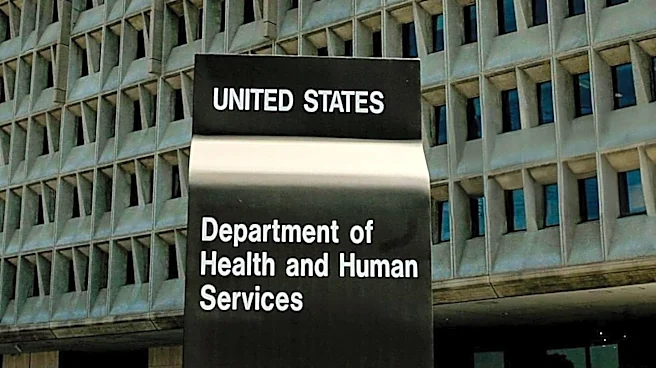
Senator Chuck Grassley has introduced companion legislation in the Senate. The proposed bill directs the Department of Health and Human Services (HHS) to develop a national digital framework for cancer screening and risk-assessment recommendations. This framework is intended to be integrated into electronic health records, making guidelines more accessible and understandable for both patients and providers. Additionally, the act encourages research, pilot projects, and provides guidance for health plans on the effective utilization of electronic screening tools. This legislation builds upon Congresswoman Scholten's previous bipartisan efforts to improve access to cancer screenings, including the CATCH IT Act.
Why It's Important?
The SCREENS Act holds significant importance for public health in the U.S. by addressing the complexity and fragmentation of current cancer screening guidelines. By creating a unified digital framework, the legislation aims to reduce confusion among patients and healthcare professionals, potentially leading to earlier detection of various cancers. Earlier detection often results in more effective treatment outcomes and improved patient prognoses. The integration of these guidelines into electronic health records could also enhance the efficiency of healthcare delivery, allowing providers to more easily track patient screening histories and identify those who are overdue for critical tests. This proactive approach could alleviate the burden on the healthcare system by preventing advanced-stage diagnoses, which typically require more intensive and costly treatments. Ultimately, the act seeks to improve health equity by making essential screening information more uniformly available and actionable across diverse patient populations.
What's Next?
The SCREENS Act will now proceed through the legislative process in both the House and Senate. Its bipartisan introduction suggests potential for broader support, but it will need to navigate committee reviews and floor votes in both chambers. If passed, HHS would be tasked with developing and implementing the national digital framework, which would involve collaboration with medical professionals, technology experts, and healthcare organizations. This implementation phase would likely include pilot programs to test the effectiveness of the integrated digital tools and gather feedback for refinement. Healthcare providers and electronic health record vendors would need to adapt their systems to incorporate the new framework. Furthermore, health plans would receive guidance on utilizing these electronic screening tools, potentially leading to changes in how they manage and encourage preventive care for their members. The success of the act will depend on effective inter-agency coordination and widespread adoption by the healthcare industry.
Beyond the Headlines
Beyond its immediate goal of simplifying cancer screenings, the SCREENS Act could catalyze a broader shift towards more integrated and data-driven preventive healthcare in the U.S. By establishing a national digital framework, the legislation sets a precedent for standardizing health recommendations across various conditions, potentially leading to more cohesive public health strategies. This move could also highlight the critical role of interoperability in healthcare technology, pushing for better communication and data exchange between different electronic health record systems. Ethically, the act raises considerations about data privacy and security as more sensitive health information is digitized and shared. Ensuring robust safeguards will be crucial to maintaining public trust. Culturally, a more accessible and unified approach to cancer screening could empower individuals to take a more active role in their health management, fostering a greater emphasis on preventive care within society. This legislative effort could serve as a model for how technology can be leveraged to improve public health outcomes on a national scale.