


What's Happening?
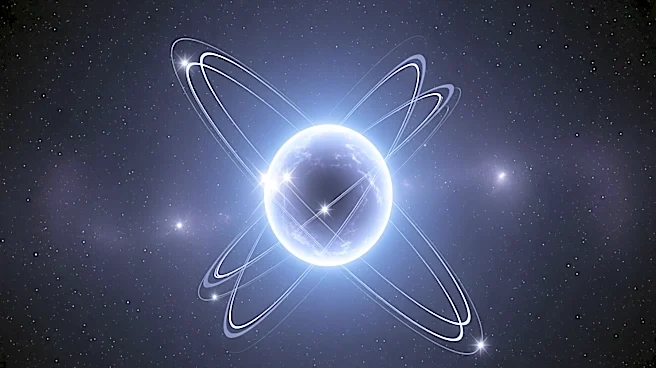
NASA scientists have proposed the existence of a mysterious 'fifth force' that could be influencing the solar system and beyond. This theory, published in Physical Review D, suggests that this force might be a previously overlooked fundamental interaction,
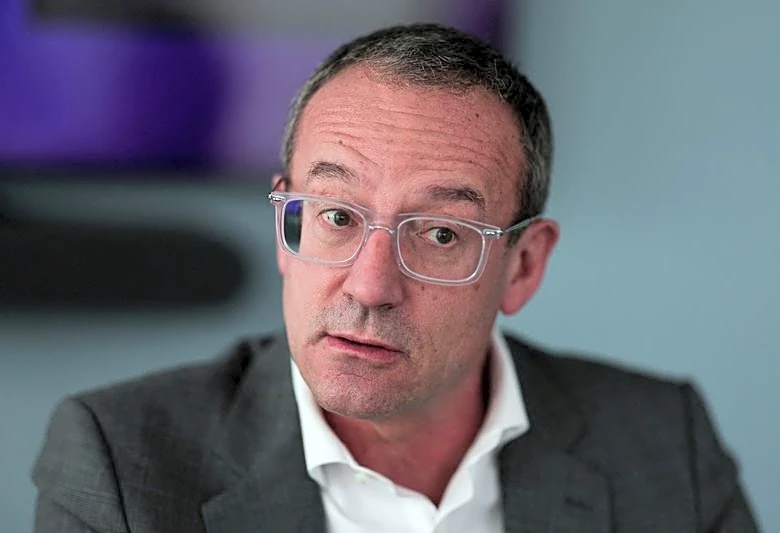
distinct from gravity, electromagnetism, and the strong and weak nuclear forces. The study introduces the concept of a Vainshtein radius, a boundary within which this force is suppressed, potentially explaining why it has not been detected in local experiments. The force could become significant beyond this boundary, affecting cosmic phenomena such as galaxy rotation and cosmic expansion. The research, led by Slava Turyshev at NASA's Jet Propulsion Laboratory, explores models like the chameleon mechanism and Vainshtein screening, which propose that the force's effects vary based on environmental conditions, remaining undetectable in dense regions like the solar system.
Why It's Important?
The potential discovery of a fifth force could revolutionize our understanding of the universe's fundamental structure. It challenges the current framework of physics, which has long been based on four fundamental forces. If confirmed, this force could provide insights into dark matter and dark energy, which are thought to constitute a significant portion of the universe. The implications extend to redefining gravitational theories and could lead to new technologies and scientific advancements. The existence of such a force would necessitate a reevaluation of current scientific models and could open new avenues for research in cosmology and particle physics.
What's Next?
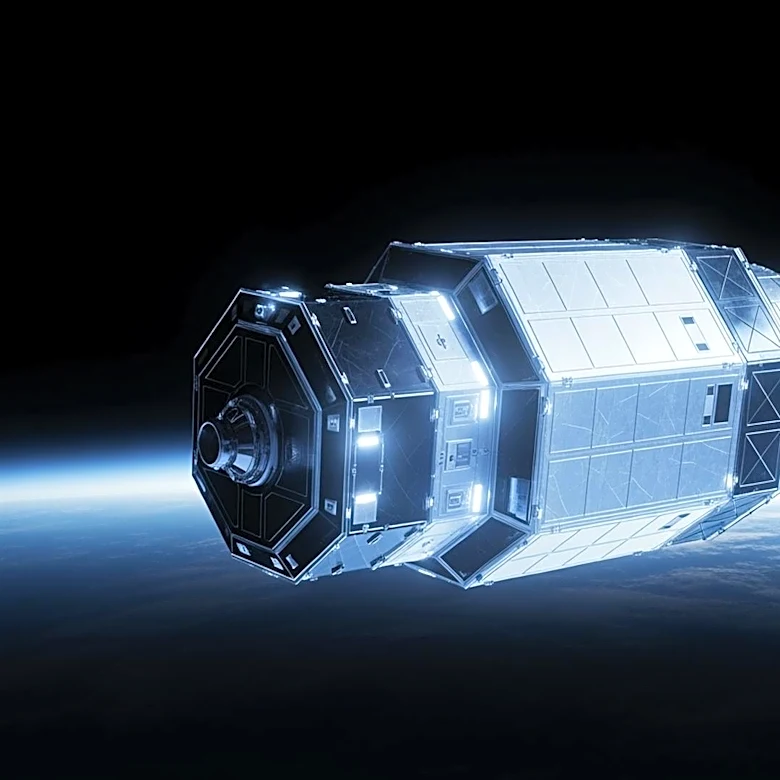
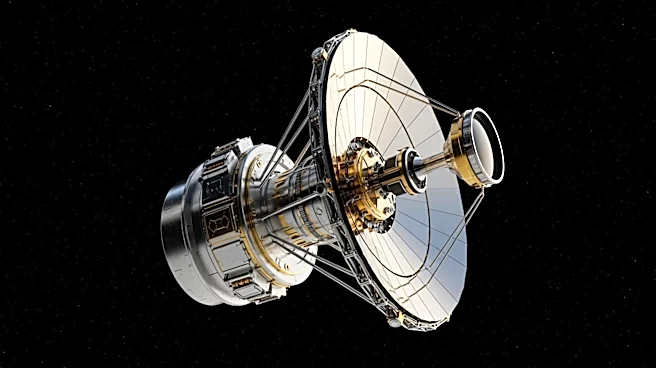
To confirm the existence of this fifth force, scientists will need to design new experiments and missions capable of detecting its subtle effects. Current instruments lack the sensitivity required to observe these phenomena, so future missions will need to focus on extreme precision and sensitivity. Large-scale surveys like Euclid and the Dark Energy Spectroscopic Instrument (DESI) are expected to play a crucial role in refining theoretical models and generating testable hypotheses. The development of new measurement techniques and spacecraft trajectories will be essential in advancing this research. The scientific community will likely prioritize these efforts to explore the potential of this groundbreaking discovery.