





What's Happening?
The European Council on Foreign Relations (ECFR) has issued a proposal for a global coalition to combat a looming food crisis, identifying three converging factors: the war in Ukraine, the persistent blockade of the Strait of Hormuz, and a potentially
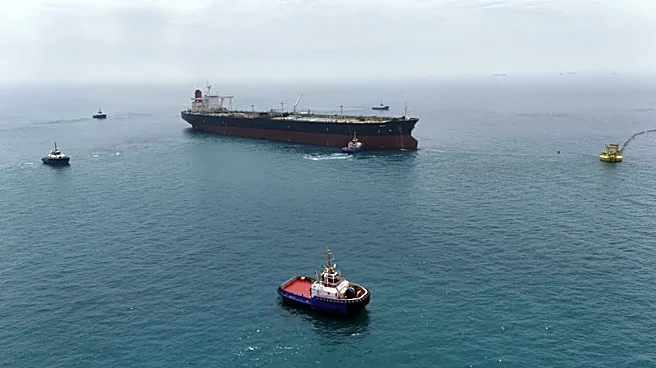
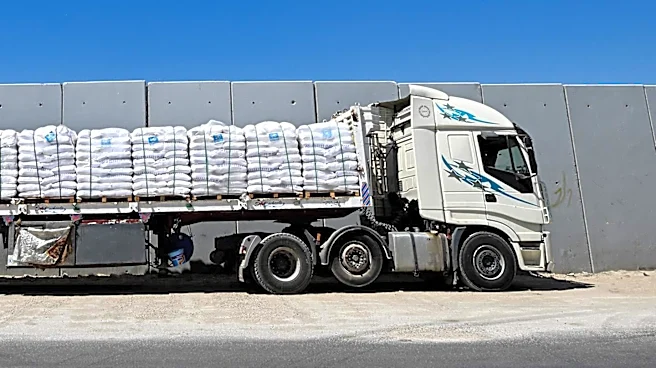
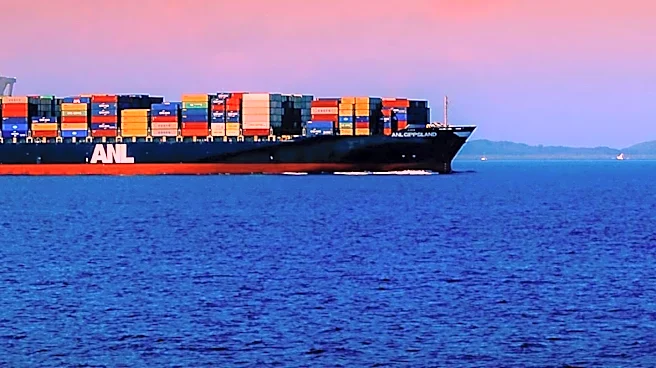
record-breaking El Niño event. Authors Cary Fowler, Jana Kobzová, and Jim O’Brien highlight that global food prices are nearly 75% higher than 1999 lows, with 2.2 billion people facing food insecurity. The anticipated 'super El Niño' is expected to cause droughts in Southern Africa and reduce agricultural output in South and Southeast Asia. Global wheat production is projected to decline by 3% in 2026-27. The Strait of Hormuz blockade impacts the transit of nitrogen fertilizers and sulfur, crucial components for phosphates, preventing a third of seaborne fertilizers from reaching farms, particularly affecting small-scale farmers in sub-Saharan Africa and South Asia. Furthermore, the conflict between Ukraine and Russia, which together account for 30% of global wheat exports, 20% of corn, 60% of sunflower oil, and Russia alone 20% of fertilizers, has severely disrupted supply chains. Russian attacks have cut Ukrainian exports from ports by 75%, while Ukrainian actions in the Black Sea and Sea of Azov have disabled over 90% of Russia's grain export capacity.
Why It's Important?
This proposed global coalition is critical due to the severe and interconnected threats to global food security, which have significant humanitarian, economic, and geopolitical implications. The confluence of war, climate phenomena, and trade route blockades creates a complex crisis that could destabilize regions and exacerbate existing vulnerabilities. For the U.S., while not directly experiencing the same level of food insecurity, the global ramifications could lead to increased migration pressures, humanitarian aid demands, and potential geopolitical instability in key regions. The disruption of fertilizer and grain supplies impacts global agricultural markets, potentially driving up food prices and contributing to inflation, which could indirectly affect U.S. consumers and agricultural industries. The proposal's call for a European-led coalition involving countries like India, China, and Turkey underscores the need for broad international cooperation, highlighting the limitations of unilateral approaches to such complex global challenges. The failure to address this crisis could lead to widespread famine, social unrest, and increased refugee flows, posing significant challenges to international stability and U.S. foreign policy objectives.
What's Next?
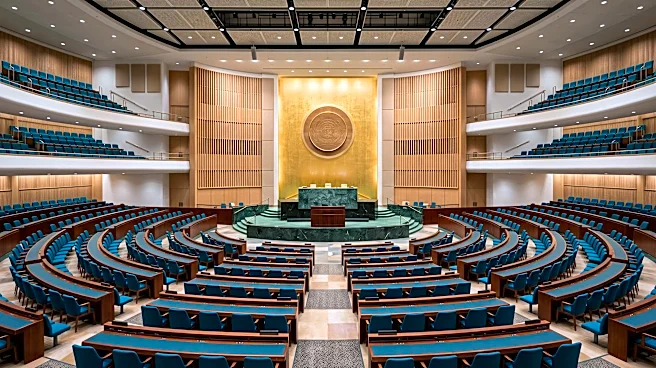
The ECFR proposes a European-led coalition that would include the United Kingdom and Ukraine, as well as countries with influence over belligerents such as India, China, and Turkey, and nations most vulnerable to the crisis in sub-Saharan Africa and Asia. The program would involve technical assistance for drought-resistant agriculture through the CGIAR network, a three-year, $500 million funding initiative for sustainable productive growth, and a partial ceasefire between Russia and Ukraine focused on agricultural and port infrastructure. Additionally, an agreement with Iran to facilitate fertilizer transit through Hormuz, potentially leveraging existing Omani-Iranian technical plans, is suggested. The authors acknowledge significant obstacles, including Russian reluctance and the absence of a single capital capable of engaging all involved decision-makers. They suggest that a core group of middle powers—Brazil, Egypt, Kazakhstan, Mexico, and Turkey—along with the UN Secretary-General, could build consensus, potentially by appealing to the claims of China, India, and BRICS nations to represent developing countries. The success of this initiative hinges on overcoming these diplomatic and logistical challenges.
Beyond the Headlines
The ECFR's proposal extends beyond immediate crisis management, touching upon deeper ethical and strategic considerations. The call for a partial ceasefire focused on agricultural infrastructure and port access highlights the ethical imperative to separate humanitarian concerns from military conflict, a principle often challenged in modern warfare. The reliance on a coalition of diverse nations, including those with varying geopolitical alignments, underscores a potential shift towards multi-polar diplomacy in addressing global crises, moving beyond traditional Western-led initiatives. The emphasis on technical assistance for drought-resistant agriculture points to a long-term strategy for climate resilience and sustainable development, recognizing that climate change is a persistent driver of food insecurity. The challenges in securing cooperation from Russia and Iran, as well as the absence of a clear diplomatic leader, reveal the complexities of international governance in a fragmented world. This initiative could set a precedent for how humanitarian crises are addressed amidst ongoing conflicts, potentially influencing future international responses to similar global challenges.