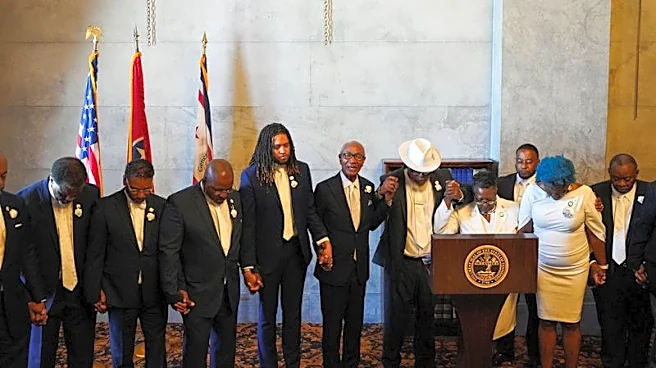








What's Happening?
A recent Supreme Court decision has struck down a majority-minority congressional map in Louisiana, prompting a wave of redistricting efforts in several states. The ruling, which was decided by a 6-3 majority, has been criticized by Justice Elena Kagan
in her dissent, suggesting it renders the Voting Rights Act nearly ineffective. In response, states like Louisiana, Tennessee, South Carolina, Mississippi, and Alabama are moving quickly to redraw their electoral maps. This decision is expected to have significant implications for the upcoming midterm elections, as it may alter the political landscape by changing district boundaries.
Why It's Important?
The Supreme Court's decision has far-reaching implications for the political landscape in the United States. By potentially weakening the Voting Rights Act, the ruling could lead to less protection for minority voters, affecting their representation in Congress. The redistricting efforts that follow may result in districts that favor one political party over another, impacting the balance of power in future elections. This could lead to policy shifts and changes in legislative priorities that do not necessarily reflect the diverse interests of the electorate. The decision underscores the ongoing debate over voting rights and the role of the judiciary in shaping electoral fairness.