



What's Happening?
The International Atomic Energy Agency (IAEA) is actively supporting the development of professionals in the nuclear fuel cycle and materials sector. The Division of Nuclear Fuel Cycle and Waste Technology (NEFW) within the IAEA is seeking to enhance
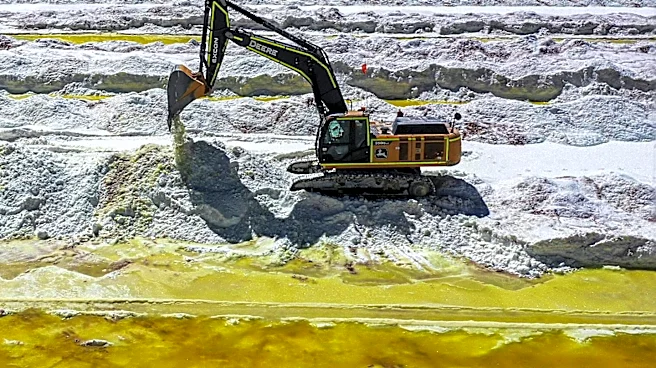
Member States' capabilities in accessing technologies, sharing best practices, and developing safe and effective approaches across various aspects of nuclear energy. This includes research reactors, the nuclear fuel cycle, decommissioning, radioactive waste management, and environmental remediation. The Nuclear Fuel Cycle and Materials Section (NFCMS) specifically assists Member States in creating safe, environmentally friendly, economically viable, proliferation-resistant, and sustainable fuel cycle options. They also promote information exchange on uranium and thorium exploration, mining, processing, nuclear fuel design, manufacturing, performance, spent fuel management, and the development of advanced nuclear fuels and fuel cycles. The IAEA maintains a roster of qualified consultants and experts globally for short-term positions and assignments to foster technology and knowledge transfer, adopt sound policies, and promote information exchange.
Why It's Important?
The IAEA's initiatives are crucial for global nuclear safety and the sustainable development of nuclear energy. By building capacity in Member States, the IAEA helps ensure that nuclear technologies are utilized responsibly and effectively, minimizing risks associated with proliferation and environmental impact. The focus on safe and environmentally friendly fuel cycle options contributes to long-term energy security and addresses climate change concerns by promoting a low-carbon energy source. Furthermore, the emphasis on information exchange and best practices fosters international cooperation, which is vital for managing complex nuclear challenges. The development of a skilled workforce through programs like the pipeline for nuclear fuel cycle and materials professionals ensures that expertise is available to support the growing demands of the nuclear industry, both in established nuclear nations and those considering nuclear power for the first time. This also has implications for U.S. national security interests by promoting global nuclear safety and non-proliferation.
What's Next?
The IAEA will continue to build its roster of qualified consultants and experts in nuclear fuel cycle and materials. These professionals will be involved in various short-term assignments, including technical editing of multi-author documents, developing training courses, creating e-learning storyboards, and producing web articles based on existing publications. The agency will also continue to foster technology and knowledge transfer, promote the adoption of sound policies and strategies, and facilitate information exchange to enhance Member States' capacity in all aspects of the nuclear fuel cycle. The pipeline registration for experts is valid for two years, after which candidates need to re-register to remain active. This ongoing process ensures a continuous supply of expertise to support the IAEA's mission and the evolving needs of the global nuclear community.
Beyond the Headlines
The IAEA's work extends beyond immediate technical assistance, touching upon critical ethical and geopolitical dimensions. By promoting proliferation-resistant fuel cycle options, the agency plays a vital role in preventing the spread of nuclear weapons technology, a cornerstone of international security. The emphasis on environmental remediation and safe waste management addresses the long-term legacy of nuclear power, ensuring that future generations are not burdened by today's energy choices. Moreover, the IAEA's efforts to build capacity in developing nations can empower these countries to harness nuclear energy for peaceful purposes, contributing to their economic development and energy independence. This also involves navigating complex international relations and ensuring equitable access to nuclear technology while upholding stringent safety and security standards. The agency's role in fostering a global community of nuclear professionals also helps to create a shared understanding and commitment to responsible nuclear governance.