

What's Happening?
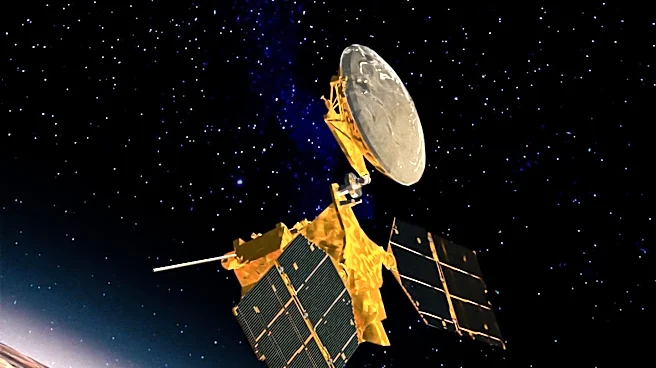
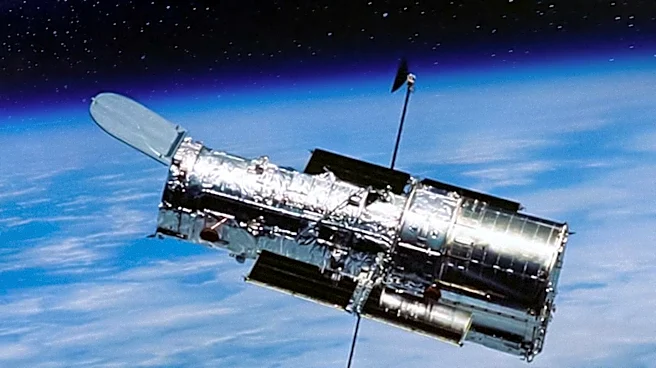
The James Webb Space Telescope (JWST) has examined two stars previously suspected of harboring Dyson spheres, revealing them to be false positives. The study, led by astrophysicist Olivia Curtis from Pennsylvania State University, found that the stars'
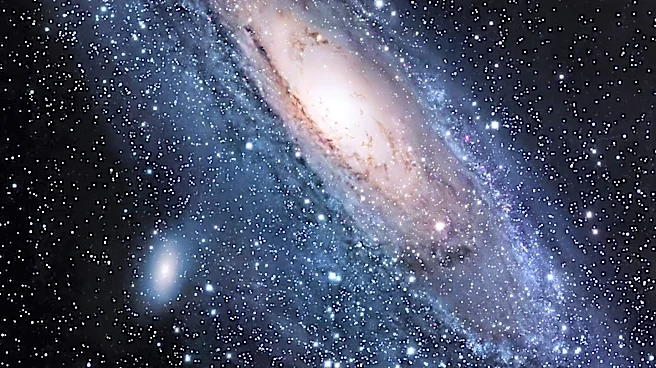
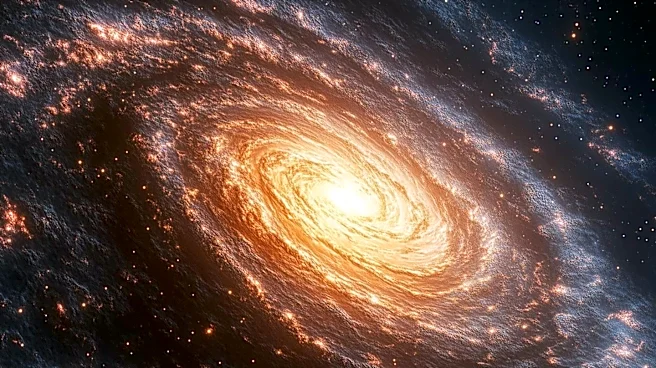
infrared excess was due to distant galaxies aligned behind them, not megastructures built by alien civilizations. The galaxies, identified as a Hot Dust-Obscured Galaxy and a dusty starburst galaxy, naturally emit the warm infrared glow initially attributed to Dyson spheres. This discovery highlights the challenges in searching for extraterrestrial technosignatures and the need for advanced techniques to differentiate between natural and artificial sources of infrared radiation.
Why It's Important?
This research underscores the complexity of identifying potential signs of extraterrestrial intelligence and the importance of ruling out natural phenomena that can mimic such signals. By debunking these Dyson sphere candidates, astronomers have refined their search methods, improving the reliability of future surveys. The findings also contribute to our understanding of galaxy formation and behavior, as the galaxies involved are scientifically interesting in their own right. The study demonstrates the JWST's capabilities in resolving complex astronomical puzzles and sets the stage for more accurate searches for alien megastructures.
What's Next?
The techniques developed during this study will be applied to future searches for Dyson spheres and other technosignatures. The next generation of telescopes will benefit from these methods, using adaptive optics to study distant galaxies with greater precision. The research team plans to continue exploring the universe for signs of advanced civilizations, using the lessons learned from this study to refine their approach. The discovery of these hidden galaxies also opens new avenues for research into their properties and the role they play in the cosmic landscape.