








What's Happening?
Grenada has significantly enhanced its disease surveillance capabilities by introducing new online Integrated Health Surveillance Guidelines. This initiative, supported by the Pan American Health Organization/World Health Organization (PAHO/WHO) and the Pandemic
Fund Project for the Eastern Caribbean, involved a three-day national end-user workshop that trained 45 health workers from across Grenada's health system and partner sectors. The guidelines consolidate essential information for health workers, including case definitions, notification pathways from facility to national level, reporting timelines, laboratory confirmation procedures, and the roles of various units. By presenting these guidelines on an online platform, the Ministry of Health can centrally update content, ensuring all facilities access the most current version. The system is designed to align national practices with the International Health Regulations (2005) and adopts a 'One Health' approach, integrating human, animal, and environmental health considerations.
Why It's Important?
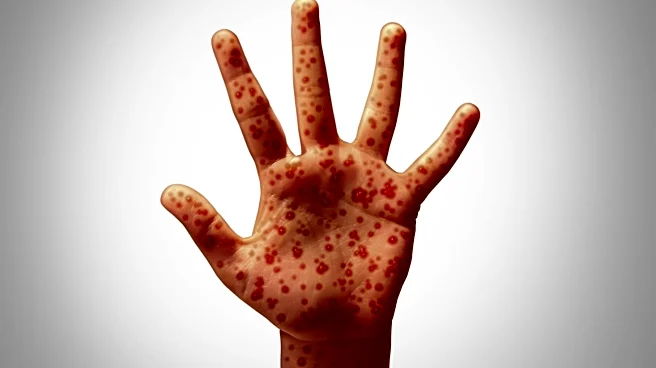
The implementation of these online guidelines is crucial for Grenada's public health infrastructure, particularly in its ability to rapidly detect and respond to disease outbreaks. In regions where diseases like measles and rubella have been absent for a generation, the ability of health workers to quickly identify and report new cases is paramount. The online platform ensures consistency in reporting and access to up-to-date information, which is vital for effective disease control. By extending training beyond the Ministry of Health to sectors like education, correctional services, and private care providers, Grenada is widening its national notification network, creating a more comprehensive and resilient surveillance system. This 'One Health' approach acknowledges the interconnectedness of health across different domains, allowing for a more holistic and effective response to public health threats, thereby protecting the population and preventing potential epidemics.
What's Next?
Following the successful workshop, the online platform for the Integrated Health Surveillance Guidelines will transition from its development environment to the Grenada Government Data Center. The Ministry of Health plans to schedule additional refresher sessions, tailored for units and facilities not represented in the initial workshop, to ensure widespread adoption and proficiency in using the new system. Feedback gathered from participants during the three-day training will be incorporated into a final revision of the content before the official handover. This continuous refinement and training process will ensure the guidelines remain practical, user-friendly, and effective in real-world scenarios. The long-term goal is to maintain these guidelines as a dynamic, online reference for the entire health workforce, enabling Grenada to sustain and improve its capacity for disease surveillance and response.
Beyond the Headlines
The shift to online, integrated health surveillance guidelines represents a significant modernization of public health practices in Grenada, moving away from static, printed documents to a dynamic, accessible digital system. This not only improves efficiency and accuracy in disease reporting but also fosters a culture of continuous learning and adaptation within the health sector. The 'One Health' approach embedded in these guidelines signifies a progressive understanding of public health, recognizing that human health is inextricably linked to animal health and the environment. This holistic perspective is increasingly vital in an era of emerging zoonotic diseases and environmental health challenges. Furthermore, the collaborative effort between the Ministry of Health, PAHO/WHO, and the Pandemic Fund highlights the importance of international partnerships and funding in strengthening national health security, particularly for small island developing states that may have limited resources. This initiative could serve as a model for other nations seeking to enhance their disease surveillance capabilities.