



What's Happening?
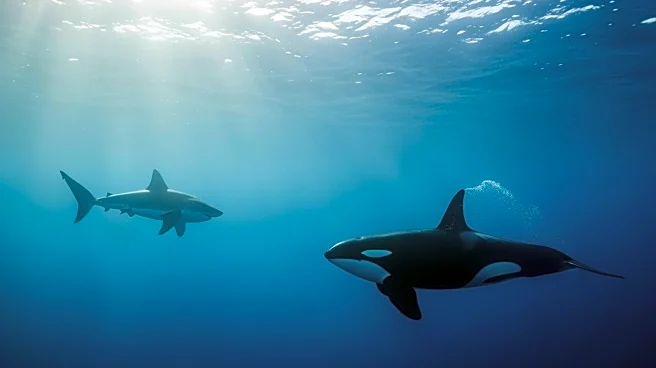
Recent studies have revealed that orcas, specifically a pair named Port and Starboard, are driving great white sharks away from their traditional habitat off the coast of South Africa. Since 2017, at least nine great white sharks have washed ashore at Gansbaai,
many missing their livers, a signature of orca attacks. This behavior is altering the local ecosystem, as documented in a 2024 paper by marine biologist Alison Towner and colleagues. The absence of great white sharks has allowed copper sharks to fill the ecological niche, which in turn affects the food chain, including the behavior of Cape fur seals and the survival of African penguins. The orcas' predation on sharks is believed to be a response to declining numbers of their preferred prey, and their hunting techniques are evolving, as seen in other pods adapting to hunt different shark species.
Why It's Important?
The displacement of great white sharks by orcas has significant implications for marine ecosystems. Great white sharks play a crucial role in maintaining the balance of marine life, and their absence can lead to increased predation on other species, such as the critically endangered African penguins. The shift in predator-prey dynamics could have far-reaching effects on the biodiversity and health of the marine environment. Additionally, the decline in great white shark populations worldwide, exacerbated by efficient predators like orcas, raises concerns about the long-term sustainability of these apex predators. Understanding these interactions is vital for conservation efforts and for maintaining the ecological balance in affected regions.
What's Next?
Continued research and monitoring are essential to understand the full impact of orca predation on shark populations and the broader ecosystem. Scientists are employing citizen science, including reports from fishers and tourism vessels, to gather more data on these interactions. Tracking studies will help assess the long-term ecological balance and inform conservation strategies. The findings could lead to policy changes aimed at protecting vulnerable shark populations and preserving marine biodiversity.
Beyond the Headlines
The orcas' preference for shark livers, rich in nutrients and fats, highlights their adaptability in response to environmental pressures. This behavior may indicate broader shifts in marine predator strategies due to changing prey availability. The situation underscores the complexity of marine ecosystems and the interconnectedness of species, emphasizing the need for comprehensive conservation approaches that consider both top-down and bottom-up ecological pressures.