
What's Happening?
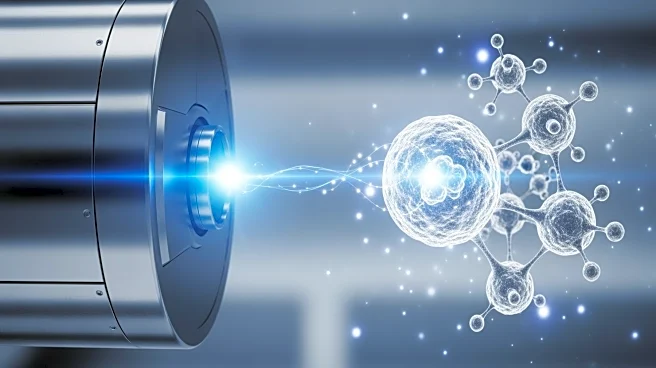
A study has evaluated the use of boronophenylalanine (BPA) in enhancing the effectiveness of proton beam therapy (PBT) for tumor treatment. The research found that using 10B-enriched BPA significantly
increases the cell-killing effect of PBT by generating high-LET radiation, which is effective against radioresistant tumors. The study involved in vitro experiments and Monte Carlo simulations, demonstrating that 10B-BPA is a more efficient sensitizer for PBT compared to other boron agents.
Why It's Important?
This research could lead to significant advancements in cancer treatment, particularly for tumors that are resistant to conventional radiation therapy. By improving the efficacy of PBT, the study offers a potential pathway to more effective and targeted cancer treatments, reducing the impact on healthy tissues. This could enhance patient outcomes and expand the applicability of PBT in clinical settings, potentially influencing treatment protocols and healthcare policies.
What's Next?
Further research is needed to explore the clinical application of 10B-BPA in PBT, including in vivo studies and trials on a broader range of cell lines. The study's findings may encourage the development of new boron agents and administration methods to optimize treatment efficacy. As the research progresses, it could lead to changes in clinical practices and increased adoption of PBT for various cancer types.