








What's Happening?
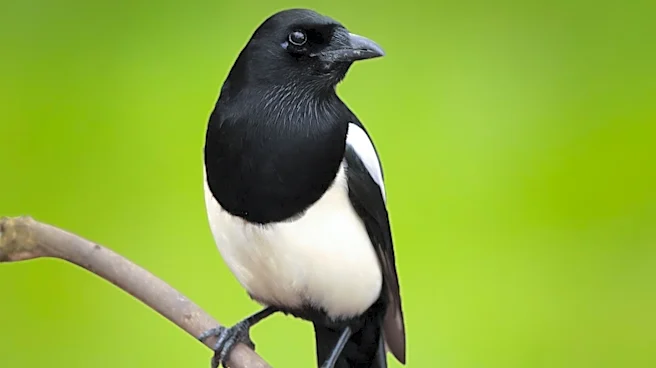
A recent study conducted by researchers from the Hebrew University of Jerusalem and other institutions has uncovered that the personalities of fan-tailed ravens significantly affect their survival in the Dead Sea desert. The research, published in Ecology
Letters, highlights how individual ravens exhibit consistent differences in risk-taking behavior, which influences their interaction with human environments. Risk-prone ravens tend to stay near human activity, benefiting from easy access to food but facing higher mortality rates. In contrast, more cautious ravens avoid humans and have a higher survival rate. The study combines lab experiments and real-world tracking to understand how these birds respond to human-driven environmental changes.
Why It's Important?
This research is crucial as it sheds light on how wildlife adapts to human-altered environments, a growing concern in ecology. The findings suggest that individual behavioral traits, or 'animal personalities,' can determine survival outcomes in rapidly changing habitats. This has broader implications for conservation strategies, as it highlights the need to consider individual behavioral differences when assessing the impact of human activities on wildlife. The study also underscores the potential for human activities to reshape wildlife populations by favoring certain personality types, which could lead to significant ecological consequences.
What's Next?
Following the study, researchers are collaborating with the Israel Nature and Parks Authority to investigate the causes of the unusual mortality rates among fan-tailed ravens. This ongoing research aims to develop strategies to mitigate the negative impacts of human activities on these birds. Additionally, the study's findings may inform broader conservation efforts, emphasizing the importance of understanding individual behavioral traits in wildlife management. The research team plans to continue exploring the intersection of movement ecology and psychology to further understand how animals adapt to human-driven environmental changes.
Beyond the Headlines
The study's integration of movement ecology and psychology represents a novel approach to understanding animal behavior in the context of human environmental impact. This interdisciplinary method could pave the way for new research paradigms that consider both ecological and psychological factors in wildlife conservation. The findings also raise ethical considerations about the role of human activity in altering natural habitats and the responsibility to protect vulnerable species. As human expansion continues, understanding these dynamics becomes increasingly important for sustainable coexistence with wildlife.