



What's Happening?
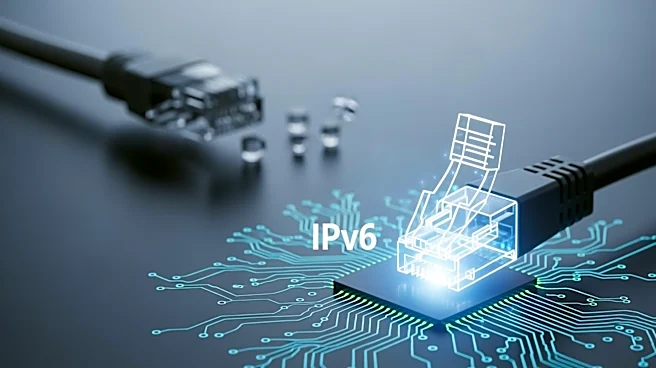
The Linux community has introduced new patches that allow for the building of an IPv6-only Linux kernel, with an option to deprecate 'legacy' IPv4. This development, led by Amazon/AWS engineer David Woodhouse, includes a series of six patches that add
a CONFIG_LEGACY_IP option, enabling the toggling of IPv4 support during the kernel build process. While the patches were released on April 1st, Woodhouse clarified that the intention behind them is genuine, aiming to separate IPv4 and IPv6 configurations more effectively. The patches currently issue a warning if a process attempts to use a legacy IP socket, marking IPv4 for deprecation. This move is part of a broader effort to modernize the Linux kernel and prepare it for future networking environments that may prioritize IPv6.
Why It's Important?
The shift towards IPv6-only builds in the Linux kernel is significant as it reflects the growing need to transition from IPv4 to IPv6, given the exhaustion of IPv4 addresses. This change could have substantial implications for network infrastructure, encouraging organizations to adopt IPv6 more widely. By allowing the deprecation of IPv4, the Linux community is pushing for a more future-proof networking environment, which could lead to increased efficiency and security in network operations. This move may also influence other operating systems and software developers to prioritize IPv6 support, potentially accelerating the global transition to IPv6.
What's Next?
As the Linux community continues to refine these patches, further discussions and testing are expected to ensure compatibility and stability. Stakeholders, including network administrators and software developers, will likely evaluate the impact of these changes on their systems and consider updating their infrastructure to support IPv6. The broader tech industry may also respond by enhancing IPv6 support in their products and services, aligning with the Linux community's direction. Additionally, educational efforts may be necessary to inform users and organizations about the benefits and requirements of transitioning to IPv6.