




What's Happening?
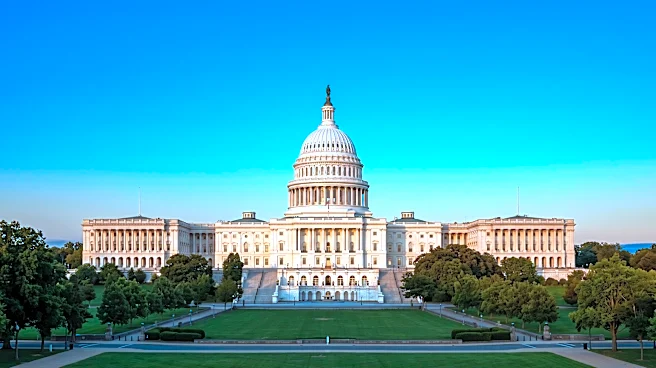
Representative Mike Levin (D-CA) has introduced the Bipartisan Nuclear Waste Administration Act, a legislative effort aimed at establishing an independent Nuclear Waste Administration. This new entity would be tasked with managing the nation's spent nuclear
fuel. The bill was referred to the House Committee on Energy and Commerce in September 2024. Levin's initiative comes as the U.S. faces a significant challenge with nuclear waste storage, particularly highlighted by the situation at the San Onofre Nuclear Generating Station in California. Approximately 3.6 million pounds of spent nuclear fuel are currently stored in underground dry-storage vaults at San Onofre, located between Interstate 5 and the Pacific Ocean. This site is vulnerable to long-term concerns such as coastal erosion, storms, and earthquakes. The federal government has been spending $2 million per day due to its failure to fulfill its obligation to find a permanent solution for nuclear waste, which remains stored at 80 sites across the country without a clear timeline for removal. The proposed underground repository at Yucca Mountain in Nevada, under consideration since 1987, stalled in 2010 amid political, public, tribal, and legal opposition, leaving it unbuilt despite an estimated $15 billion development cost.
Why It's Important?
The lack of a national solution for spent nuclear fuel poses significant environmental, economic, and public health risks across the United States. The current decentralized storage at 80 sites, many not designed for indefinite storage, leaves communities vulnerable to potential hazards. For instance, the San Onofre facility's proximity to the Pacific Ocean and the Rose Canyon Fault Zone raises concerns about the impact of natural disasters like earthquakes and coastal erosion on the stored waste, which remains dangerous for thousands of years. The federal government's ongoing expenditure of $2 million daily for its failure to manage nuclear waste represents a substantial financial burden on taxpayers. Furthermore, research suggests a correlation between proximity to nuclear power plants and increased cancer rates, as indicated by a Harvard public health Ph.D. researcher's study, although causation is not yet established. Addressing this issue is crucial for public safety, environmental protection, and fiscal responsibility, especially as the federal government looks to expand nuclear power as part of its energy independence strategy.
What's Next?
The Bipartisan Nuclear Waste Administration Act, currently referred to the House Committee on Energy and Commerce, will undergo review and potential amendments. Its progression through Congress will determine the future of a centralized, independent approach to nuclear waste management. Should the bill advance, the establishment of a dedicated Nuclear Waste Administration could lead to the development of a national strategy for permanent disposal, potentially including innovative solutions like deep borehole storage, as proposed by Utah. The ongoing discussions and research, such as those presented at the Scripps symposium, will continue to inform policy decisions and highlight the urgency of the matter. Stakeholders, including environmental groups, local communities near storage sites, and the nuclear industry, will likely continue to advocate for their interests as the legislative process unfolds. The federal government's commitment to expanding nuclear energy also means that the need for a robust waste management solution will only grow, making the outcome of this legislative effort critical for the nation's energy future.
Beyond the Headlines
The challenge of nuclear waste management extends beyond immediate safety and economic concerns, touching upon profound ethical and intergenerational responsibilities. The fact that nuclear waste remains hazardous for '2000 generations' underscores a long-term burden placed on future societies, raising questions about our obligation to provide safe and sustainable solutions. The failure to establish a permanent repository, despite decades of effort and billions of dollars, reflects deep-seated political, social, and scientific complexities. This issue highlights the tension between the benefits of nuclear energy as a carbon-free power source and the enduring legacy of its waste products. The debate also brings to light the concept of environmental justice, as many storage sites are located in communities that may bear a disproportionate share of the risks. The search for a national solution is not merely a technical problem but a societal one, requiring consensus on risk allocation, scientific certainty, and the ethical treatment of future generations.