
What's Happening?
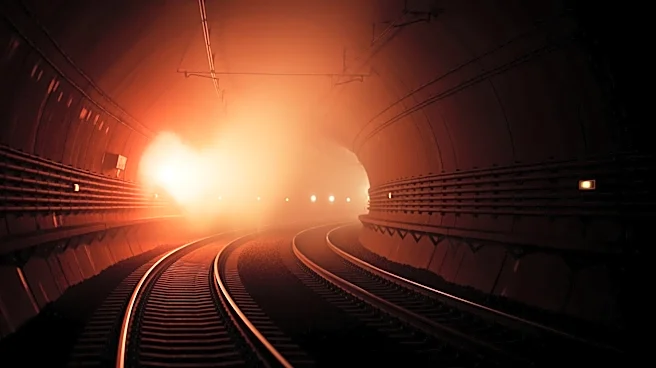
A fire broke out at Penn Station in Midtown Manhattan early Friday morning, causing significant disruptions to rail services during the morning rush hour. The fire involved an Amtrak contractor maintenance
vehicle in one of the Hudson River tunnels. The FDNY responded to the incident on Track 11 shortly after 1:30 a.m. Two individuals suffered serious injuries and were transported to hospitals, while three others refused medical attention. As a result of the fire, Amtrak, NJ Transit, and Long Island Rail Road (LIRR) services were temporarily suspended, with some trains being diverted to Grand Central and Hoboken. The subway and PATH systems are cross-honoring rail tickets to accommodate affected passengers. By late morning, services had resumed with residual delays, but cancellations and up to 60-minute delays were still expected.
Why It's Important?
The disruption of rail services at Penn Station, a major transit hub, highlights the vulnerability of critical infrastructure to unforeseen incidents. The fire not only affected thousands of commuters but also underscored the importance of maintenance and safety protocols in preventing such occurrences. The incident has significant implications for the daily operations of Amtrak, NJ Transit, and LIRR, as well as for the broader transportation network in the New York City area. The quick response by emergency services helped mitigate the impact, but the event serves as a reminder of the potential for infrastructure-related disruptions to have wide-reaching effects on urban mobility and economic activity.
What's Next?
In the aftermath of the fire, investigations are likely to focus on the cause of the incident and the condition of the maintenance vehicle involved. Amtrak and other transit agencies may review their safety and maintenance procedures to prevent future occurrences. Commuters can expect continued delays and adjustments in service as the situation stabilizes. The incident may prompt discussions among city officials and transit authorities about infrastructure investment and emergency preparedness to enhance the resilience of the transportation network.