



What's Happening?
Finance Minister Nirmala Sitharaman is set to present the FY27 budget on February 1, marking her ninth consecutive budget presentation. The budget aims to sustain economic growth, maintain fiscal discipline, and introduce reforms to buffer the economy
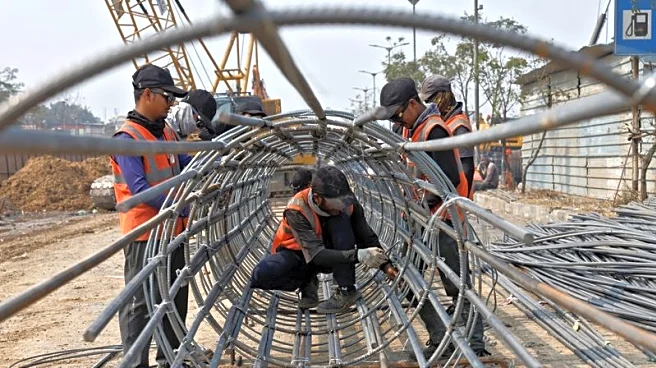
against global trade tensions, including tariffs imposed by the U.S. The budget presentation, scheduled for a Sunday, is unprecedented in India's history. The budget comes at a time when domestic demand remains strong, but global uncertainties such as geopolitical tensions and volatile commodity prices pose challenges. The government is under pressure to boost consumption, accelerate job creation, and increase capital spending while keeping the fiscal deficit in check. The budget is expected to focus on capital expenditure, with significant investments in infrastructure, railways, renewable energy, and urban transport. Tax stability is anticipated, with no major changes expected in corporate tax rates, although minor adjustments to personal income tax may be made to support middle-class consumption.
Why It's Important?
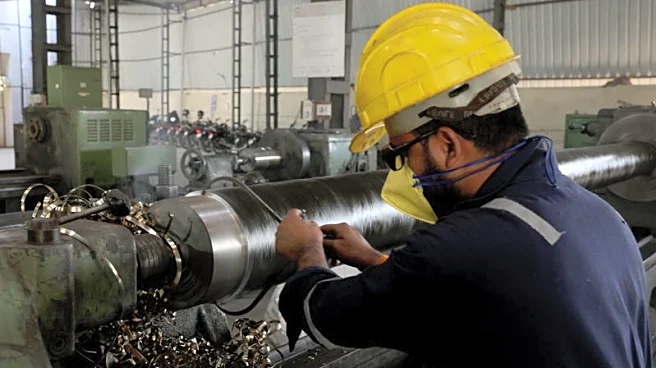
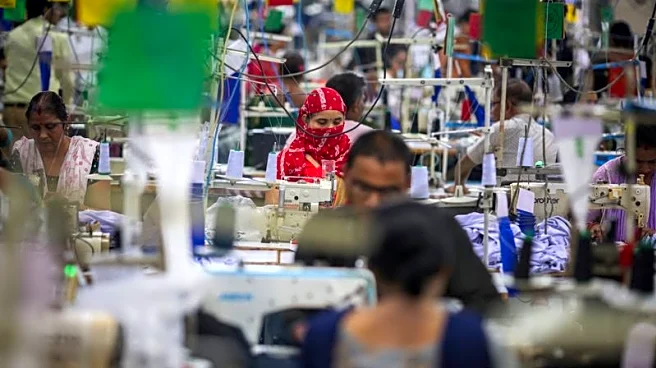
The FY27 budget is crucial for maintaining India's economic momentum amid global uncertainties. By focusing on capital expenditure and infrastructure development, the government aims to crowd in private investment and stimulate economic growth. The emphasis on job creation, particularly in labor-intensive manufacturing and MSMEs, is expected to address unemployment and support economic recovery. The budget's focus on renewable energy and green transition aligns with India's long-term energy security goals and commitment to reducing import dependence. Tax stability is important for maintaining investor confidence and ensuring predictability in the business environment. The budget's measures will be closely watched for their impact on India's economic resilience and ability to navigate global economic challenges.
What's Next?
Following the budget presentation, the government will likely focus on implementing the proposed measures to ensure their effectiveness in stimulating growth and job creation. Stakeholders, including businesses and investors, will be keenly observing the government's ability to balance fiscal discipline with necessary spending. The budget's impact on key sectors such as infrastructure, manufacturing, and renewable energy will be monitored closely. Additionally, the government's approach to managing global trade tensions and maintaining investor confidence will be critical in the coming months. The budget's political implications, particularly in light of upcoming state elections, will also be a point of interest.
Beyond the Headlines
The FY27 budget reflects broader economic and political dynamics, including the need to balance fiscal prudence with growth-oriented spending. The government's focus on infrastructure and manufacturing highlights its strategy to drive long-term economic development. The budget's emphasis on renewable energy and green transition underscores India's commitment to sustainable development and energy security. The political undertones of the budget, especially in the context of upcoming state elections, suggest a careful balancing act between economic priorities and electoral considerations. The budget's success will depend on effective implementation and the government's ability to navigate global economic uncertainties.