



What's Happening?
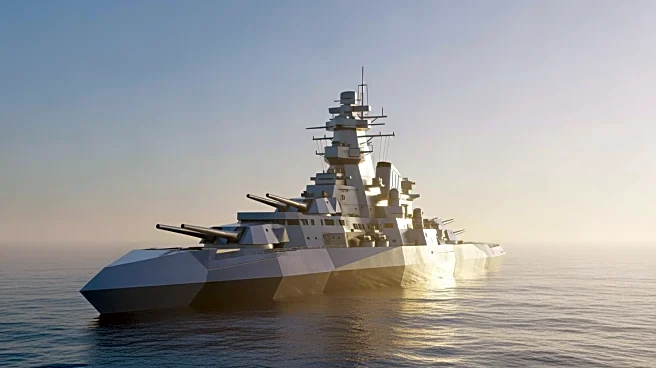
President Trump has announced the development of a new class of U.S. Navy battleships, named the 'Trump class'. These ships are touted as the most lethal surface combatants ever constructed. The announcement comes as Ukraine demonstrates a shift in naval
warfare by using drones to attack Russian oil tankers, highlighting the changing nature of maritime conflict. Ukraine's use of drones has significantly impacted Russian naval capabilities, showcasing the effectiveness of low-cost, high-impact technology in modern warfare. This development raises questions about the relevance of traditional naval power in the face of emerging threats.
Why It's Important?
The introduction of the 'Trump class' battleships signifies a major investment in traditional naval power at a time when the nature of maritime warfare is rapidly evolving. Ukraine's successful use of drones to disrupt Russian oil shipments underscores the potential for smaller, technologically advanced nations to challenge larger naval powers. This shift could have significant implications for U.S. naval strategy, as it may need to adapt to counter new forms of warfare that prioritize agility and technological innovation over sheer firepower. The U.S. Navy's focus on traditional battleships may need reevaluation in light of these developments.
What's Next?
The U.S. Navy will likely face pressure to integrate more advanced technologies into its fleet to address the evolving threats posed by drone warfare. This could involve increased investment in anti-drone systems and the development of new strategies to protect merchant and military vessels. Additionally, the effectiveness of Ukraine's tactics may prompt other nations to adopt similar approaches, potentially leading to a reevaluation of global naval power dynamics. The U.S. may need to balance its investment in traditional naval assets with the need to innovate and adapt to new forms of maritime conflict.
Beyond the Headlines
The shift in naval warfare highlighted by Ukraine's use of drones raises ethical and legal questions about the targeting of civilian shipping and the potential for increased conflict on the high seas. As nations develop more sophisticated unmanned systems, the risk of unintended escalation and collateral damage may increase. This could lead to calls for new international regulations governing the use of drones in maritime conflict. The U.S. and other naval powers may need to engage in diplomatic efforts to establish norms and agreements that address these emerging challenges.