




What's Happening?
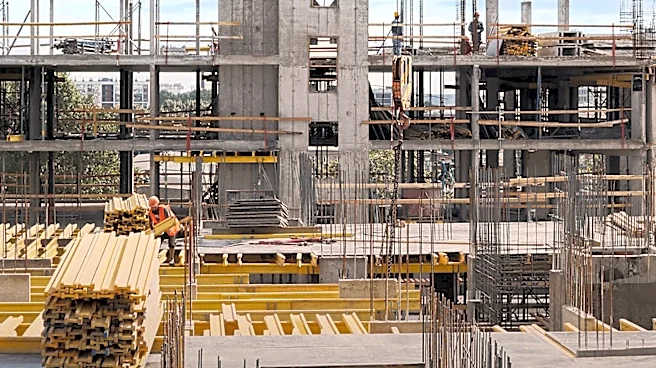
A federal law requiring the use of American-made construction materials for projects receiving certain government funds is reportedly slowing down the construction of affordable homes across the United States. This mandate, intended to support domestic
manufacturing, is creating challenges for builders who rely on federal assistance to develop housing for lower-income communities. The requirement means that if a construction project receives specific federal funding, all materials used must be sourced from within the U.S. This policy, while aiming to bolster the American economy and create jobs, is inadvertently causing delays and potentially increasing costs for affordable housing initiatives. Builders are finding it difficult to procure all necessary materials domestically, leading to project slowdowns and complications in meeting housing demands.
Why It's Important?
This situation highlights a critical tension between supporting domestic industries and addressing pressing social needs, specifically the affordable housing crisis in the U.S. The 'Buy American' provision, while beneficial for American manufacturers and workers, places an additional burden on construction projects that are already operating on tight budgets and timelines. The delay in affordable housing construction directly impacts low-income families and individuals who are struggling to find safe, accessible, and reasonably priced housing. This could exacerbate existing housing shortages and increase homelessness, particularly in urban and rapidly developing areas. The policy's unintended consequence is that it makes it harder for federal funds to achieve their primary goal of expanding affordable housing options, potentially undermining the very communities it aims to serve.
What's Next?
The ongoing challenges posed by this law may prompt discussions among policymakers regarding potential adjustments or exemptions for affordable housing projects. Builders and housing advocates are likely to continue lobbying for modifications to the 'Buy American' requirements, arguing for greater flexibility to ensure that affordable housing initiatives can proceed without undue delays or cost increases. This could involve advocating for waivers for certain materials that are not readily available domestically or for a re-evaluation of the scope of the mandate for federally funded housing projects. The debate will likely center on balancing the economic benefits of domestic sourcing with the urgent need to provide housing for vulnerable populations, potentially leading to legislative amendments or new administrative guidelines.
Beyond the Headlines
The issue extends beyond mere logistical hurdles; it touches upon the broader philosophical debate of protectionism versus global supply chain efficiency. While the intent to support American industries is clear, the practical application reveals complexities in a globalized economy where specialized materials and components are often sourced internationally for cost-effectiveness and availability. This scenario also raises questions about the long-term sustainability of relying solely on domestic production for all construction materials, especially when facing rapid demand for essential infrastructure like affordable housing. The situation could also spur innovation in domestic manufacturing to meet these demands, but in the short term, it underscores the need for nuanced policy-making that considers both economic nationalism and the immediate social welfare implications.