
What's Happening?
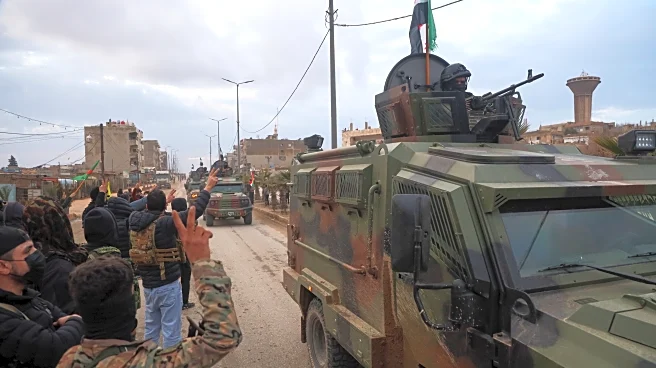
The Syrian Defense Ministry has announced a ceasefire in Aleppo following three days of intense clashes between government forces and Kurdish fighters. The conflict, which erupted in the northern city,
has displaced over 140,000 people. The ceasefire, effective in the neighborhoods of Sheikh Maqsoud, Achrafieh, and Bani Zaid, allows armed groups six hours to evacuate with personal light weapons. Despite the ceasefire, tensions remain high as no fighters have left the area, and sporadic violence continues. The local Kurdish council has rejected calls for evacuation, citing distrust in the Damascus government. The U.S. envoy to Syria, Tom Barrack, has welcomed the ceasefire and is working to extend it beyond the initial deadline.
Why It's Important?
The ceasefire is a critical development in the ongoing Syrian conflict, highlighting the fragile nature of peace efforts in the region. The displacement of thousands underscores the humanitarian crisis and the urgent need for a sustainable resolution. The involvement of international actors, such as the U.S., reflects the geopolitical complexities and the global interest in stabilizing Syria. The ceasefire's success or failure could influence future negotiations and the broader regional stability, impacting international relations and humanitarian aid efforts.
What's Next?
Efforts to extend the ceasefire and ensure compliance from all parties will be crucial in preventing further violence. The international community, including the U.S., may increase diplomatic pressure on the Syrian government and Kurdish forces to adhere to the ceasefire terms. Humanitarian organizations will likely focus on providing aid to displaced populations and addressing the immediate needs of affected communities. The situation remains volatile, and any breach of the ceasefire could lead to renewed hostilities, complicating peace efforts and regional stability.